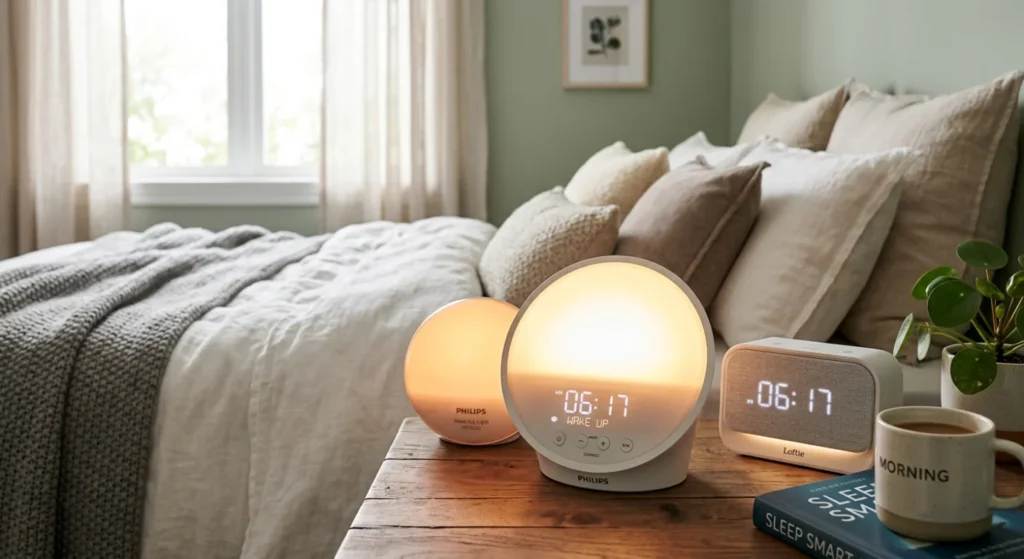
If you’ve ever slept through three alarms, silenced your phone without realizing it, or woken up 45 minutes late wondering how it happened, you’re not broken. You’re a heavy sleeper, and the standard alarm clock was never really designed with you in mind.
Sunrise alarm clocks work differently. Instead of jolting you awake with a harsh buzz or shriek, they gradually fill your room with light, mimicking a natural sunrise. That change matters more than most people realize, and it’s rooted in how your body actually wakes up.
Why Heavy Sleepers Struggle to Wake Up
Heavy sleepers aren’t just lazy or unmotivated. Most have one of a few underlying reasons that make it harder to respond to sound-based alarms.
Some people naturally spend more time in deep sleep, also called slow-wave sleep, which is significantly harder to interrupt. During this phase, your brain is less responsive to external noise, even loud ones. Others have a naturally delayed circadian rhythm, meaning their body genuinely doesn’t feel ready to wake at a normal hour.
Winter makes this worse. When your bedroom is dark at 7 a.m., your body interprets that darkness as a signal to keep producing melatonin, the hormone that keeps you sleepy. A traditional alarm fights against that biology. A sunrise alarm clock works with it.
How Sunrise Alarm Clocks Work
These devices use gradually increasing light, usually over 20 to 30 minutes, before your set wake time. The light starts dim, often amber or red, and shifts toward bright white or full-spectrum light by the time the alarm triggers.
This light suppresses melatonin production and stimulates cortisol, which is your body’s natural wake-up hormone. By the time the audio alarm kicks in, if you set one, your body has already started its waking process. You’re not being dragged out of sleep. You’re being guided out of it.
The result is lighter, easier, and less groggy mornings. For heavy sleepers who constantly feel ripped from sleep, this can feel like a genuine shift.
Key Features to Look For Before Buying
Not all sunrise alarm clocks are built the same. Here’s what actually matters for heavy sleepers specifically.
Light intensity (measured in lux): Look for at least 200 lux, ideally 300 or more. Devices under 200 lux may not be bright enough to trigger a real physiological response, especially in a room with existing light sources.
Sunrise simulation duration: 20 minutes is fine for lighter sleepers. If you’re a deep sleeper, look for clocks that offer a 30 to 60 minute gradual sunrise window.
Backup audio alarm: This is non-negotiable for heavy sleepers. The light does most of the work, but having a sound option such as FM radio, nature sounds, or a traditional tone ensures you won’t miss your alarm entirely.
Color temperature range: Devices that shift from warm amber to cool white more closely mimic real sunrises and tend to feel more natural.
Snooze and dimmer controls: These should be straightforward to use without hunting for buttons at 6 a.m.
Best Sunrise Alarm Clocks for Heavy Sleepers
Here are some of the most reliable options, based on what actually sets them apart for heavy or deep sleepers.
Philips SmartSleep Wake-Up Light (HF3520)
One of the most researched wake-up light alarm clocks available. It offers 20 progressively brighter light steps, 300 lux maximum brightness, and FM radio. The amber-to-white color shift is smooth and genuinely feels sunrise-like. Clinical studies by Philips show that 92% of users reported waking up more naturally compared to a regular alarm. Best for those who want a well-tested, reliable device without complex setup.
Hatch Restore 2
This combines sunrise simulation with sleep sounds, meditation content, and a clean, minimal design. The app-based control gives you more customization than most other devices. It is worth noting that an app subscription is required for some features, which is something to consider before buying. Best for heavy sleepers who also struggle with falling asleep and want an all-in-one sleep and wake tool.
Lumie Bodyclock Shine 300
A solid mid-range option with a 30-minute sunrise simulation and a high enough lux output for most bedrooms. The sunset feature, which gradually dims the light at night, is a genuine bonus for anyone trying to fix their sleep schedule, not just their wake time. Best for deep sleepers who want a fuss-free device without app dependency.
Jall Wake-Up Light Alarm Clock
A more budget-friendly pick that still delivers on core features, including gradual sunrise simulation, color options, nature sounds, and FM radio. It won’t match the premium build quality of Philips or Hatch, but for someone who wants to test whether sunrise alarms work before investing heavily, this is a sensible starting point. Best for first-time buyers who are unsure whether they’ll stick with it.
Totobay Sunrise Alarm Clock
Offers a 7-color sunrise simulation and consistent lux output. The controls are straightforward with no app needed. It gets the job done reliably. Best for heavy sleepers who want simplicity without spending a lot.
Benefits and Limitations
What actually works:
- Reduces sleep inertia, which is that groggy and disoriented feeling after waking
- Effective for people with Seasonal Affective Disorder and winter fatigue
- Makes mornings noticeably less stressful over time
- Particularly helpful for people who wake before natural sunlight in autumn and winter
What to keep in mind:
- If you sleep with blackout curtains and share a bed, your partner may wake earlier than intended
- Heavy sleepers who spend most of their night in deep sleep may still need an audio backup
- It takes one to two weeks for your body to fully adjust and respond consistently
- No sunrise clock will fix a sleep deficit, so addressing your total sleep hours still matters
Do Sunrise Alarm Clocks Actually Work?
The science is reasonably solid. Light is the primary cue your circadian clock uses to determine the time of day. By introducing a controlled, gradual increase in light before your wake time, you’re giving your body’s internal clock a legitimate biological signal rather than simply competing with it.
Research published in Chronobiology International has found that dawn simulation can improve sleep quality scores and reduce sleep inertia, even in people with delayed sleep phases. That doesn’t mean it works perfectly for every individual, but the mechanism is real and the user data is consistent enough to take seriously.
For heavy sleepers, the key is choosing a clock with adequate lux output and a long enough simulation window, ideally 30 to 60 minutes, so the light has time to do its work before the audio alarm kicks in.
Alternatives for Extremely Heavy Sleepers
If you’ve tried sunrise alarms and still struggle, these additions can help.
- Vibrating alarm clocks placed under your pillow or worn on your wrist. The physical sensation is difficult to ignore even during deep sleep.
- Paired smartwatch alarms set to detect light sleep stages and vibrate during a natural waking window.
- Smart lighting systems such as Philips Hue, synced to your wake time to flood an entire room with light rather than just one bedside device.
- Sleep tracking apps that analyze your sleep cycles and wake you during lighter sleep within a set window. Combined with a sunrise clock, this can significantly reduce difficulty waking.
If you’re exploring other accessories designed for daily routines, our roundup on skeletonized watches under $500 is worth a look. Quality everyday tools often make a bigger difference than we expect.
If traditional alarms haven’t worked for you, a sunrise alarm clock might be a simple but effective change worth trying.
FAQ’s
Can a sunrise alarm clock wake a very deep sleeper?
It can, but it works best when paired with an audio backup alarm. The light eases your body toward waking, but deep sleepers often need both the light and a sound cue to fully wake up, especially at first.
How many lux does a sunrise alarm clock need for heavy sleepers?
Aim for at least 200 to 300 lux at maximum brightness. Lower lux devices may not produce a strong enough biological response, particularly in already bright rooms or for people who are especially difficult to wake.
How long does it take for a wake-up light alarm clock to work?
Most people notice a difference within 3 to 7 days, but the full adjustment typically takes one to two weeks of consistent use. Your circadian system needs time to associate the light pattern with waking.
Are sunrise alarm clocks useful in winter specifically?
Yes, and this is actually where they perform best. When natural morning light isn’t available, the simulated sunrise gives your body the light cue it’s missing. Many users find them most effective from October through March.
Do sunrise alarm clocks help with snoozing?
Often, yes. Because your body is already transitioning out of sleep when the alarm sounds, the impulse to hit snooze is reduced. You’re not being snapped from deep sleep. You’re finishing a gentler waking process.
What’s the difference between a sunrise alarm clock and a light therapy lamp?
Light therapy lamps are used during the day, often in the morning, for 20 to 30 minutes to treat Seasonal Affective Disorder or boost energy levels. Sunrise alarm clocks simulate a gradual dawn before you wake. They serve different purposes, though some devices combine both functions.