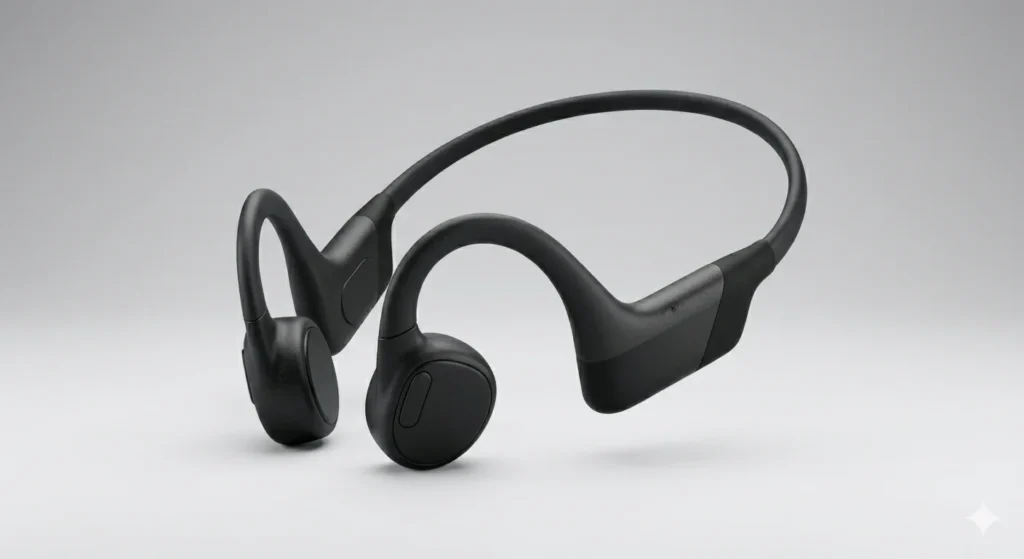
Running with music or podcasts is great. Running without hearing the car coming up behind you? Not so great.
That’s the real reason bone conduction headphones have become a go-to choice for runners who want both entertainment and awareness. If you’ve been researching the best bone conduction headphones for running but aren’t sure which ones are actually worth your money, you’re in the right place.
What Are Bone Conduction Headphones and Why Do Runners Actually Like Them?
Regular headphones (in-ear or over-ear) work by sending sound waves directly into your ear canal. Bone conduction headphones do the opposite: they sit on your cheekbones, just in front of your ears, and transmit vibrations through your skull directly to your inner ear.
Your ears stay completely open.
For runners, this changes everything. You can hear your playlist AND the world around you at the same time. No more pulling one earbud out at every crosswalk. No more missing that cyclist shouting “on your left.”
It’s a genuinely different listening experience, and once you get used to it, going back to traditional earbuds for outdoor runs feels weirdly claustrophobic.
The Real Problems Runners Face with Regular Headphones
Before diving into recommendations, it helps to understand why so many runners are making the switch. These are the frustrations that come up constantly in runner communities:
- Ear fatigue: Long runs with in-ear buds can cause soreness, especially with silicone tips that don’t fit perfectly.
- Sweat damage: Most earbuds aren’t designed for heavy sweat exposure. Many die within a season.
- Safety concerns: Blocking ambient sound is genuinely risky on roads, trails, and bike paths.
- Slipping fit: Earbuds fall out during aggressive strides or hill work. It’s frustrating and distracting.
- Ear infections: Running with sweat-soaked buds pushed deep into your ears isn’t great for ear health long-term.
Bone conduction headphones solve most of these in one shot. They’re not perfect (more on that below), but for many runners they’re the better trade-off.
What to Look for When Buying Bone Conduction Headphones for Running
1. Water and Sweat Resistance
This is non-negotiable. Look for an IP67 or IP55 rating minimum. IP67 means the headphones can be submerged briefly in water, which also means sweat during intense workouts is a complete non-issue. Bone conduction headphones for sweaty workouts need this level of protection.
2. Fit and Stability
The wraparound titanium band design is standard for most bone conduction models, and it works well for running. The real question is weight and how snugly the transducers sit against your cheekbones. Heavier models can bounce slightly during trail running.
3. Battery Life
A 6-hour battery is the baseline for serious runners. If you’re doing marathon training with 3+ hour long runs, aim for 8-10 hours. Always check real-world battery figures from user reviews, not just the spec sheet.
4. Sound Quality
This is the honest part: bone conduction headphones generally don’t match in-ear earbuds for sound quality. Bass is noticeably weaker. But for running, you don’t need concert-hall audio. You need your playlist to be clear enough to keep you motivated, and most modern bone conduction headphones deliver that just fine.
5. Sound Leakage
At higher volumes, people nearby can hear what you’re listening to. In practice, it’s only really noticeable in quiet environments. For running outdoors, it’s rarely an issue.
Top Picks for Runners in 2026
Shokz OpenRun Pro 2 (Best Overall)
The Shokz OpenRun Pro 2 is consistently what most running communities recommend, and for good reason. It sits comfortably, has solid battery life around 10-12 hours, and the IP55 rating handles sweat and light rain well. The sound quality is noticeably better than older bone conduction models, with improved bass response.
Good for: Most runners, especially those doing regular road or trail miles.
Honest cons: Not the cheapest option. Sound leakage is present at higher volumes.
Shokz OpenSwim 2 (Best for Swimmers and Wet Conditions)
If you run in the rain a lot or also want to swim with your headphones, the OpenSwim 2 is worth serious consideration. It’s fully waterproof (IP68 rated) and built specifically for water exposure. It has built-in MP3 storage, so no phone is needed during your swim or run.
Good for: Triathletes, runners who train in all weather.
Honest cons: No Bluetooth in water mode. You’ll need to pre-load your tracks.
Shokz OpenRun (Best Budget Pick)
For runners who want to try bone conduction without a major investment, the standard OpenRun delivers the core experience at a lower price point. Battery life lands around 8 hours, and the fit is solid for most head sizes.
Good for: Beginners to bone conduction, budget-conscious runners.
Honest cons: Slightly less refined sound than the Pro 2.
Vidonn F3 Pro (Budget Surprise)
If you’re on a tight budget, the Vidonn F3 Pro often gets positive mentions for the price it costs. It won’t match Shokz build quality, but it gives you a real sense of whether bone conduction works for your running style before committing more money.
Open-Ear Running Headphones
Some runners are exploring open-ear running headphones that aren’t strictly bone conduction but use directional speakers angled toward the ear. These are worth mentioning because some people find them more comfortable and they can offer better sound quality. The trade-off is usually less secure fit during running. If you’re curious about what DPI and peripheral gear specs mean in relation to performance devices like headphones (yes, there’s a crossover in how we evaluate gadget specs), this breakdown on performance metrics is a useful read for how to critically read hardware numbers.
Are They Actually Safe for Running?
Open-ear running headphones including bone conduction models are widely considered the safest headphone type for outdoor running. You retain full ambient hearing. Traffic, cyclists, dogs barking, someone shouting at you from behind, you’ll hear all of it.
That said, “safe” doesn’t mean you should zone out on busy roads. Use situational awareness regardless of what you’re wearing on your ears.
Common Complaints Worth Knowing Before You Buy
Reddit’s running communities are pretty vocal about a few consistent frustrations:
Vibration sensation at high volumes: Some people find the vibrating transducers uncomfortable, especially during long runs. It’s not painful for most people, but it’s different enough to notice at first.
Limited bass: If you listen to genres where bass really matters, you may find bone conduction headphones underwhelming. This is probably the most common complaint from first-time users.
Price: Quality bone conduction headphones aren’t cheap. The Shokz lineup especially runs at a premium. However, users who’ve gone through multiple pairs of sweat-damaged earbuds often find the long-term value is actually solid.
FAQ’s
Are bone conduction headphones safe for running on roads?
Yes, they’re one of the safest options available. Since your ears stay open, you can hear traffic, other pedestrians, and any environmental sounds without obstruction. They’re explicitly designed to keep you aware of your surroundings.
Can you hear traffic clearly while wearing them?
Clearly enough, yes. There’s no audio isolation working against you. Normal road noise, conversations, and alerts come through naturally. Volume control matters here. Keep it at a comfortable level and your situational awareness is excellent.
Are bone conduction headphones good for long-distance runs?
They’re arguably better than traditional earbuds for long distances. No ear fatigue from silicone tips, no sweat buildup in the ear canal, and no discomfort after two or three hours. The wraparound fit stays secure without relying on ear tips.
Do bone conduction headphones work well with heavy sweat?
Waterproof bone conduction headphones with IP55 or higher ratings are specifically built for this. Sweat doesn’t damage them and doesn’t cause slipping the way it does with some earbuds. Just make sure you’re buying a model with proper water resistance, not just “sweat resistant” marketing language.
Is the sound quality good enough for running?
For most runners, yes. The honest caveat is that bass is lighter than what you’d get from good in-ear headphones. But clarity for vocals, podcasts, and most popular music is solid. If audio quality is your first priority, you might find yourself wanting more. If safety and comfort come first, the sound quality is more than enough for a motivating run.
So Which One Should You Pick?
If you’re a regular runner who wants a reliable, well-reviewed pair without overthinking it: the Shokz OpenRun Pro 2 is the safest choice. It’s the most consistently recommended model across runner forums, review sites, and real-world feedback.
If you’re budget-conscious and just want to try bone conduction: start with the standard Shokz OpenRun or the Vidonn F3 Pro before committing to a premium model.
If you’re a triathlete or run in heavy rain regularly: the Shokz OpenSwim 2 is built for exactly that use case.
The best bone conduction headphones for running aren’t necessarily the most expensive ones. They’re the ones that match your actual running conditions, your budget, and whether the bone conduction experience even clicks for you personally.
Try one, give yourself two to three weeks to adjust to the different sound delivery, and you might find it’s exactly what your runs were missing.