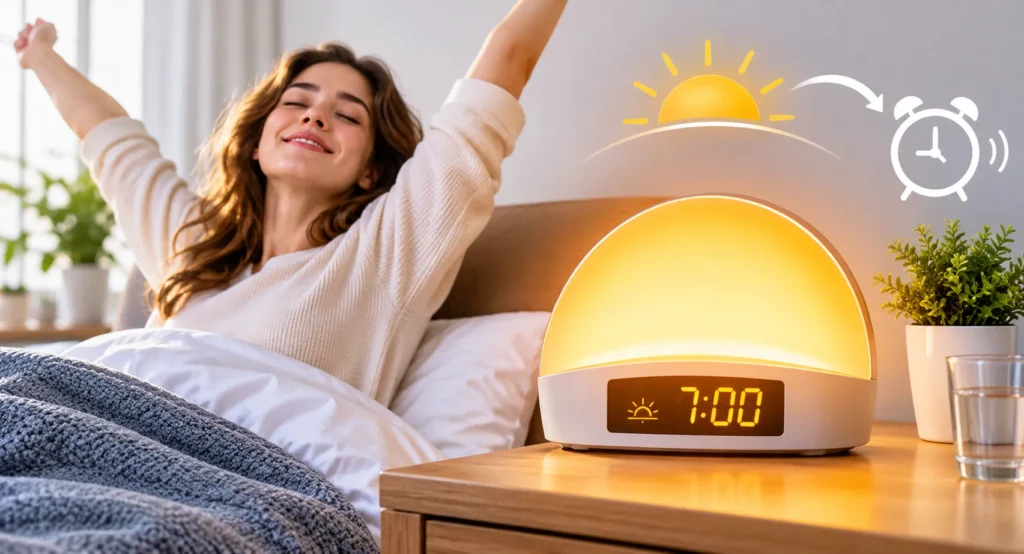
A sunrise alarm clock is a bedside lamp that wakes you with slowly rising light instead of a sudden sound. People buy it hoping for easier mornings. So does a sunrise alarm clock really work? The research says it can reduce morning grogginess, but the results are not the same for everyone. This guide explains how it works and what the evidence shows.
Quick Answer
A sunrise alarm clock brightens gradually before your wake up time. Lab studies show it can improve alertness and mood after waking. However, the benefits are modest, and some studies found no effect. It works best as a gentler wake up, not a cure for poor sleep.
What Is A Sunrise Alarm Clock?
It combines an alarm clock with a lamp. Some models start brightening up to 90 minutes before your wake up time. Most peak at around 200 to 400 lux, which is far dimmer than a light therapy lamp. Many also add sounds, a radio, or a sunset mode for winding down. NBC Newsinteriormedicine
How Does It Work?
The idea is simple. Your body uses light to tell day from night. A slow rise in light copies a real dawn, so your body starts waking before the alarm. The light is long wavelength, so it looks red to orange and passes through your eyelids more easily than blue light. bgr
The main target is sleep inertia. This is the groggy, disoriented stretch between sleep and full wakefulness, and it can last from one minute to up to three hours. Dark winter mornings can make it worse. Less morning light can weaken your natural alerting signals. nihnih
Does A Sunrise Alarm Clock Really Work?
The evidence is encouraging but limited.
What The Studies Found
- Alertness And Mood: One lab study tested light that rose from 0 to 250 lux over 30 minutes before wake up, in healthy adults after a short night of sleep. A separate study found that a similar dawn light improved alertness and positive mood compared with constant light or no light. bib-bvbecnu
- Sleep Inertia Complaints: Researchers also found that an alarm clock with dawn simulation reduced complaints of sleep inertia, though the reason was unclear. nih
- Timing Matters: Another study found that 30 minutes of rising light worked better for subjective alertness than a sudden burst of light at wake up time, but it found no clear effect on cognitive performance. uliege
- Seasonal Low Mood: A 2015 study found dawn simulators improved seasonal depression symptoms about as well as bright light therapy. bgr
Where The Evidence Falls Short
Not every result is positive. A study of middle aged and older adults found no significant effect on alertness or balance, and the light increased wakefulness before the morning alarm. Also, many claims go too far. Benefits like a healthier cortisol rise have not been thoroughly studied, and early results are mixed. stanfordhealthcarebgr
Another point matters for heavy sleepers. Traditional alarms wake you faster and more reliably than light alone. So keep a sound backup if missing your alarm would cause problems. bgr
Who Benefits Most?
A sunrise alarm clock suits people who hate loud alarms or feel groggy on dark mornings. It can also suit people who struggle to keep up a daily routine. Dawn simulation takes less active effort than bright light therapy, so users may stick with it more consistently. sleepreviewmag
It is less likely to help if you sleep deeply, work night shifts, or wake up already rested. In addition, it is not a replacement for medical treatment. Read our guide to the light therapy alarm clock if low mood is your main concern.
What To Check Before You Buy
You do not need to spend a lot, but a few specs matter.
- Brightness: Aim for roughly 250 to 300 lux at your eyes. bgr
- Distance: Place the lamp 16 to 24 inches from your head. bgr
- Sound Options: Choose a backup sound if you sleep heavily.
- Size And Display: Check your bedside space and make sure the display can dim.
For models and prices, see our guide to the best wake up light alarms. You can also read more on the science in this PMC study on sleep inertia and bedroom lighting and this Sleep Review overview of dawn simulation.
Conclusion
A sunrise alarm clock is a gentle way to start the day, and research suggests it can improve alertness and mood for many people. It is not a miracle fix, and the studies show mixed results in some groups.
For most people who dislike harsh alarms, it is a low risk upgrade worth trying. Just check brightness and distance, and keep a backup sound if you sleep deeply.
FAQs
Q1. What is a sunrise alarm clock?
Ans. It is a lamp that brightens slowly before your wake up time. It copies a real dawn to wake you more gently.
Q2. Does a sunrise alarm clock work for heavy sleepers?
Ans. Not always. Traditional alarms wake you more reliably, so choose a model with a loud sound backup.
Q3. Is a sunrise alarm clock the same as a SAD lamp?
Ans. No. A sunrise alarm is much dimmer and designed to wake you. A SAD lamp delivers about 10,000 lux to treat seasonal low mood.