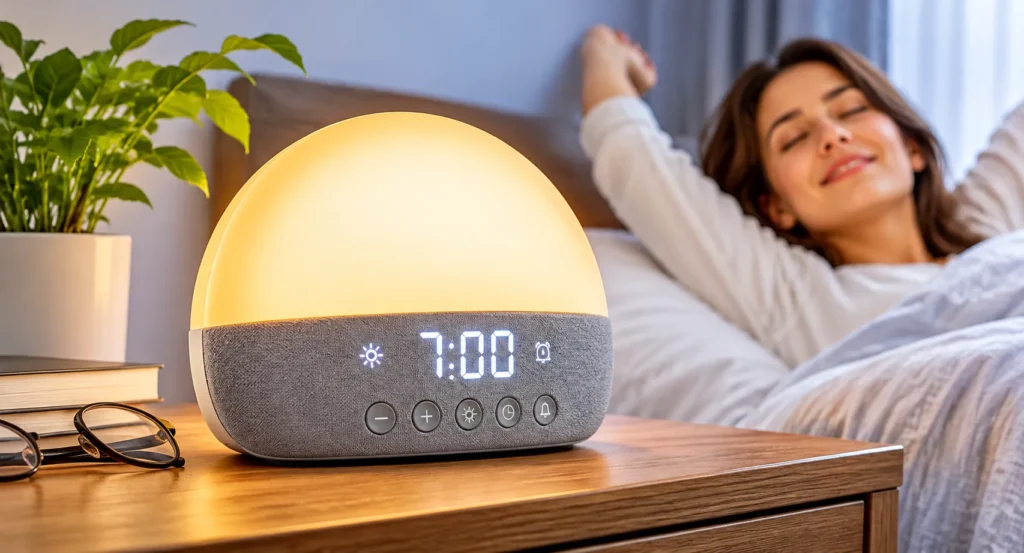
A light therapy alarm clock sounds like one device that fixes dark mornings and winter low mood. In reality, it usually means two different products. One wakes you gently, and the other treats seasonal low mood. This guide explains the difference and helps you choose the right one. I did not test these devices myself.
Quick Answer
If you only want an easier wake up, buy a sunrise alarm clock. If you struggle with seasonal depression, a 10,000 lux light therapy lamp is the proven option, and you should talk to a doctor first. Many people benefit from using both.
What Is A Light Therapy Alarm Clock?
The term mixes two ideas. A sunrise alarm clock brightens slowly before your alarm. A light therapy lamp is a bright light box you sit near, often called a SAD lamp.
Sunrise lamps are not designed to treat a mood disorder. They mimic gradual sunrises and sunsets to support gentler wake ups. Light therapy lamps, however, are designed to boost mood, and research supports their use for seasonal depression. sleepsleep
Sunrise Alarm Vs Light Therapy Lamp
| Feature | Sunrise alarm clock | Light therapy lamp |
| Main goal | Gentler waking | Treat seasonal low mood |
| Typical brightness | Around 200 to 400 lux | About 10,000 lux |
| When you use it | Before and at wake up time | After waking, in the morning |
| Best for | Groggy mornings | Seasonal affective disorder |
Most sunrise alarms peak around 200 to 400 lux, far below the 10,000 lux of a SAD lamp. True combinations of the two are rare, because waking to 10,000 lux would feel harsh. interiormedicineliveworksleep
Does Light Therapy Actually Work?
For seasonal depression, the evidence is strongest for bright light boxes. Mayo Clinic says a light box should generally provide 10,000 lux and give off as little UV light as possible. mayoclinic
Dawn simulation looks promising too. A 2015 study in the Journal of Affective Disorders found that dawn simulators improved seasonal depression symptoms about as well as bright light therapy. However, the research behind 10,000 lux therapy is far more extensive. So a sunrise alarm should not replace treatment if your symptoms are serious. bgrliveworksleep
How To Choose A Light Therapy Alarm Clock
Start with your goal. Then pick the device that matches it.
If You Want An Easier Wake Up
Choose a sunrise alarm clock. Brightness and distance matter most. You need around 250 to 300 lux, and the lamp should sit 16 to 24 inches from your head. Also check sound options, size, and whether you want an app. bgr
If You Want To Treat Seasonal Low Mood
Choose a light therapy lamp. Mayo Clinic suggests asking whether the box is made specifically to treat SAD, since some lamps are designed for skin conditions instead. Check the brightness and the UV output too. Brighter boxes need less time each day than dimmer ones. mayoclinicmayoclinic
If You Want Both
Use them together. A sunrise alarm helps with the wake transition, while a SAD lamp delivers the stronger light dose for mood. Start the day with the sunrise alarm, then sit with the lamp. interiormedicine
When To Use Each Device
For a SAD lamp, timing matters. Mayo Clinic typically recommends using the light box within the first hour of waking. The usual guidance is about 30 minutes at eye level. Consistency matters more than perfection, so pick a routine you can keep. mayoclinicfamiliprix
A sunrise alarm works automatically. It starts brightening before your alarm, so you only need to place it correctly.
Examples Worth Considering
For waking gently, Vice named the Philips SmartSleep HF3520 its best overall wake up light. Popular Science picked Hatch as the best option with a built in sound machine. You can compare more models in our guide to the best wake up light alarms. VICEpopsci
For light therapy, Stylist describes the Lumie Vitamin L as a bestselling lamp that provides 10,000 lux at a 20 cm distance. Brands and models change often, so check current specs before you buy. stylist
Safety First
Light therapy is not right for everyone. It can be risky for people with bipolar disorder or a family history of it. Mayo Clinic also warns that increasing exposure too fast, or using the box too long, may trigger manic symptoms in people with bipolar disorder. Talk to your doctor before you start. You can read more in the Mayo Clinic Q&A on light therapy and this Sleep.com guide to sun lamps. sleepmayoclinic
Conclusion
A light therapy alarm clock is really a choice between two tools. Pick a sunrise alarm for gentle mornings and a 10,000 lux lamp for seasonal low mood. Many people use both.
For most shoppers who just hate dark mornings, a sunrise alarm clock is enough. If your mood drops every winter, speak to a doctor and consider a proper light therapy lamp.
FAQs
Q1. Is a sunrise alarm clock the same as a light therapy lamp?
Ans. No. A sunrise alarm wakes you gently at low brightness. A light therapy lamp delivers about 10,000 lux to treat seasonal low mood.
Q2. Can one device do both jobs?
Ans. True combinations are rare. Most people buy a sunrise alarm and a separate light therapy lamp.
Q3. When should I use a light therapy lamp?
Ans. Mayo Clinic typically suggests using it within the first hour of waking. Ask your doctor about the right session length.