When the power goes out, your phone becomes your link to alerts, family, and help. An emergency solar power bank sounds like the perfect backup. However, many of these devices charge very slowly from the sun. This guide explains what really matters, what safety agencies recommend, and how to keep your gear ready. I did not test these devices myself.
Quick Answer
The stored charge matters most. Choose a power bank with enough capacity, keep it charged, and treat solar as a slow backup. For longer outages, pair a normal power bank with a foldable panel instead of relying on tiny built in panels.
What Is An Emergency Solar Power Bank?
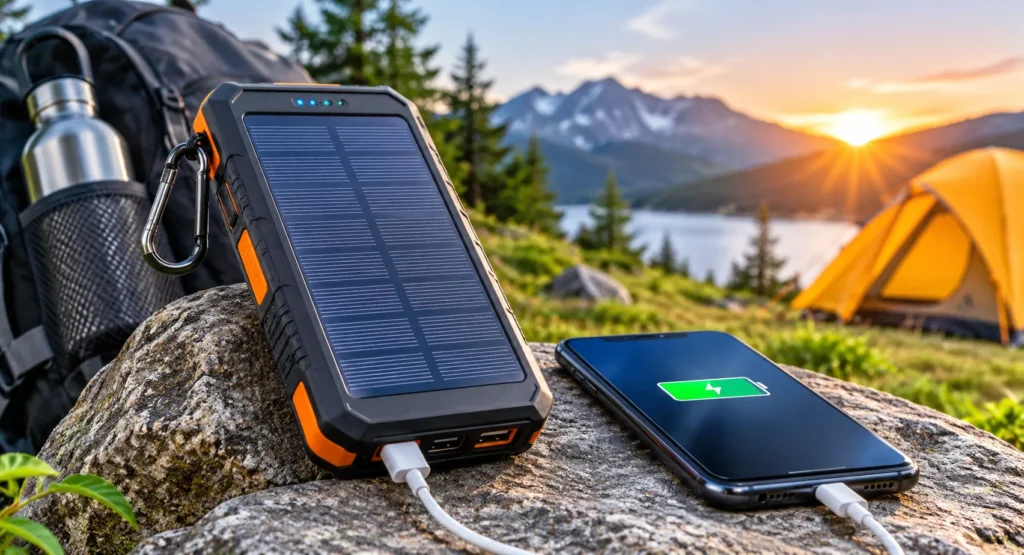
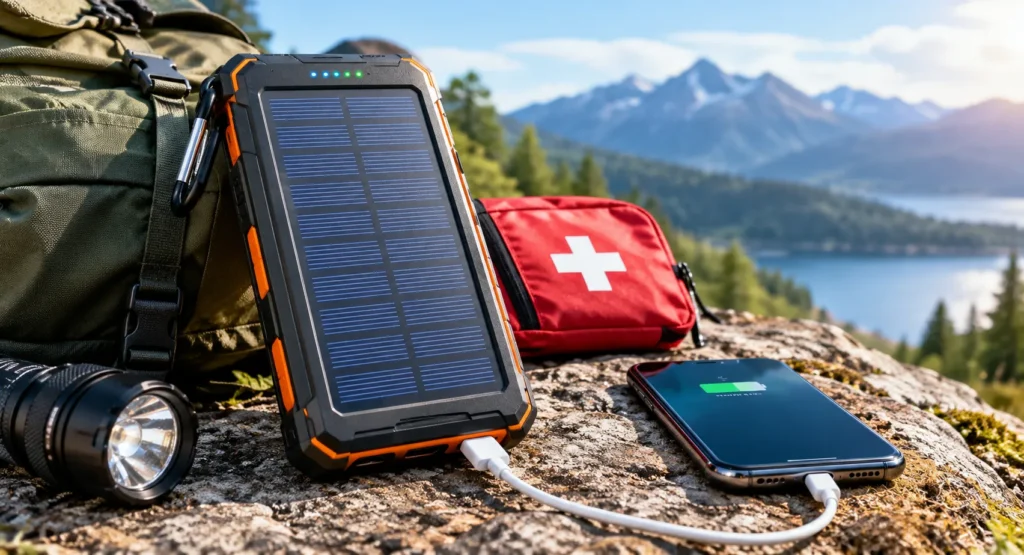
It is a power bank that can also recharge from sunlight. Some have panels built into the case. Others use a separate foldable panel. Many add a flashlight, and some include a hand crank radio.
Why The Solar Part Is Only A Backup
Solar charging is slow. OutdoorGearLab found that most battery banks with panels stuck to the side can barely trickle charge themselves. Its Blavor 18W all in one bank would need about 29 hours of good midday sun to recharge fully. Also, big capacity numbers on the box do not speed up charging, because panel size does. outdoorgearlaboutdoorgearlab
So in a real blackout, the power already stored inside your bank does the heavy lifting. The sun only extends it.
What Safety Agencies Recommend
Official advice points the same way. The Red Cross says to charge your devices ahead of time, and to make sure any power bank or solar charger is fully charged. A FEMA spokesperson also recommends alternative power sources such as a portable charger or power bank for when the power goes out. redcrossCNN
Ready.gov suggests charging phones and considering a portable charger in case of a prolonged outage. Also, its kit list includes a battery powered or hand crank radio that can receive NOAA Weather Radio alerts. That radio keeps you informed even if your phone dies. firstonsiteredzonewireless
How To Choose An Emergency Solar Power Bank
- Capacity: A typical phone battery holds roughly 3,000 to 5,000 mAh. A 10,000 mAh power bank can give about 1.5 to 3 full phone charges. Choose larger if you charge for a family. luminaidelectricaltrader
- Panel Size: Bigger panels charge faster. Tiny built in panels are mostly for topping up.
- Ports: USB-C output charges modern phones faster than a single USB A port.
- Flashlight: It is useful, but a separate flashlight is more reliable.
- Durability: Look for a rugged case and protected ports, since emergency gear takes knocks.
- Backups: A hand crank radio and spare batteries cover what a power bank cannot.
Good Setups To Consider
These examples come from OutdoorGearLab’s August 2026 testing. Prices are list prices from that review, so check current prices first.
Best Setup: Normal Power Bank Plus A Foldable Panel
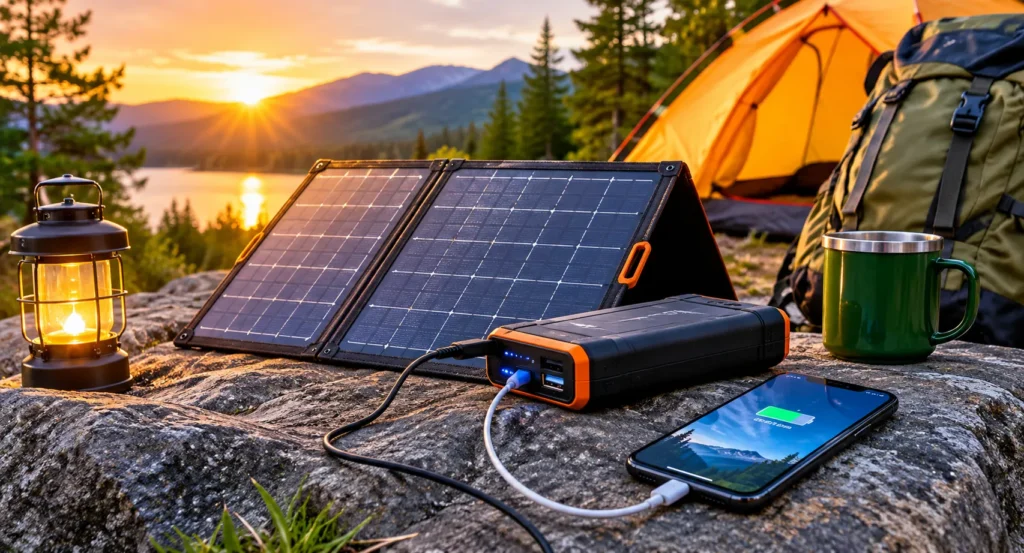
The testers found that separate solar chargers are usually more effective for charging separate battery banks. For a light option, the Blavor 10W lists at $40, weighs about 12.6 ounces, and is the most efficient panel at 10 watts or less. For more power, the FlexSolar 40W recharged two phones in under two hours of full sun and lists at $64. Reviews You Can Rely On +2
Simple Option: An All In One Bank
The Blavor 18W has a 20,000 mAh built in battery and four fold out panels. It is simple to store. However, the testers suggest charging it at home from a wall adapter and using sunlight only to extend it. That fits an emergency kit well. outdoorgearlaboutdoorgearlab
Budget Add On: Hand Crank Radio Combo
Low cost units combine a radio, flashlight, and small solar power bank. One example listed by a news shopping guide costs about $18. Their phone charging is limited, so value them mainly as a radio and light.
How To Store It So It Works
Many people leave a power bank at 100% in a drawer for months. That is not ideal. Anker advises storing a power bank at about 40 to 60% charge in a cool, dry spot, and topping it up every three months. Also avoid hot places. Keep it away from cars, direct sun, and heat sources. ankerbrick
Then charge it fully when a storm is forecast. That follows the Red Cross advice above. Add a reminder to your phone calendar so you do not forget.
When You Need More Than A Power Bank
A power bank will not run medical equipment or a refrigerator. A fridge keeps food cold for about four hours without power, and a full freezer for about 48 hours. If you rely on a medical device, make a plan with your doctor. firstonsite
For longer outages, a portable power station is a bigger step. These can charge phones and laptops and run lamps, but they can take hours to charge, so prepare once forecasts predict storms. You can read more in this NBC Select guide to power outage supplies. For solar testing, see the OutdoorGearLab solar charger review. observer-reporter
Conclusion
An emergency solar power bank is useful, but the solar part is a slow backup, not a main power source. Charge it before trouble starts, store it properly, and add a radio and flashlight.
For most households, a normal 10,000 to 20,000 mAh power bank plus a small foldable panel is the smartest plan. Keep it charged, and keep it somewhere you can find in the dark.
FAQs
Q1. Is a solar power bank good for emergencies?
Ans. Yes, as a backup. Its stored charge matters most, while solar charging is slow.
Q2. How long does it take to charge a solar power bank?
Ans. It can take more than a day of strong sun for a large built in panel model. A separate foldable panel is faster.
Q3. Should I keep my emergency power bank fully charged?
Ans. Charge it fully before a storm. For long storage, keep it around half charge and top it up every three months.