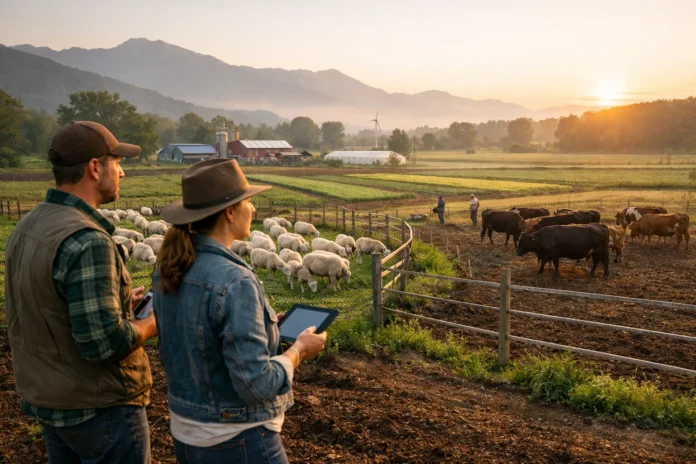


Picture this: you’re scrolling through agricultural forums or sustainability blogs, and suddenly you come across the word “simbramento.” It sounds important, maybe even technical, but what does it actually mean?
If you’ve found yourself searching for this term, you’re not alone. More people are discovering simbramento as conversations around sustainable practices, smart breeding techniques, and traditional farming wisdom gain momentum in 2026.
Why are people searching for Simbramento?
The growing interest isn’t random. With climate uncertainty pushing us toward better resource management, terms like simbramento are resurfacing from traditional knowledge systems. Farmers, researchers, and sustainability advocates are rediscovering methods that worked for generations before industrial agriculture took over.
People want answers about how to improve yields without chemicals, how to breed healthier livestock naturally, and how traditional practices can solve modern problems. That’s where simbramento enters the conversation.
Why it matters today
We’re facing a critical moment. Soil degradation, biodiversity loss, and the pressure to feed growing populations are forcing us to rethink how we approach agriculture and animal husbandry. Simbramento represents a bridge between old wisdom and new science.
What makes it relevant now is its focus on working with nature rather than against it. Instead of forcing systems through heavy intervention, simbramento emphasizes intelligent organization and natural selection processes.
Where the term is commonly used
You’ll encounter simbramento primarily in agricultural communities, particularly in regions with strong pastoral traditions. It shows up in livestock management discussions, crop planning conversations, and increasingly in academic research exploring sustainable alternatives to industrial farming.
Some regions use related terms or have their own versions, but the core concept remains consistent across cultures that value careful breeding and resource management.
What Does Simbramento Mean?
Literal Definition & Linguistic Roots
Breaking down the word gives us clues. The prefix suggests similarity or bringing together, while the root relates to action and management. Essentially, simbramento describes the intentional grouping and management of living organisms to achieve specific outcomes.
Think of it as a strategic arrangement. Whether you’re organizing livestock for breeding or planning crop placement, simbramento guides how elements interact within a system.
Historical Origin of the Term
The exact origins remain somewhat unclear, which isn’t unusual for terms rooted in oral agricultural traditions. What we know is that similar concepts appear across Mediterranean and Latin American farming communities, suggesting shared practical knowledge that evolved independently in different places.
Rural communities didn’t always document these practices formally. Knowledge passed from generation to generation through demonstration and experience rather than written manuals.
Evolution of Its Meaning Over Time
Originally, simbramento likely referred specifically to livestock breeding practices. Farmers would carefully select which animals to group together based on desired traits.
Over time, the concept expanded. Today, it can describe any systematic approach to managing biological resources, from crop rotation patterns to ecosystem design. The underlying principle remained the same, but applications broadened as understanding deepened.
How Simbramento Works in Practice
Core Principles Behind Simbramento
Three main ideas drive Simbramento. First, intentionality matters. Random grouping produces random results, but thoughtful selection creates predictable improvements.
Second, observation is essential. Successful simbramento requires watching how organisms behave, understanding their needs, and recognizing patterns that indicate compatibility or productivity.
Third, patience pays off. Unlike modern quick fixes, simbramento works on natural timelines. Results accumulate over seasons and generations rather than appearing overnight.
Step-by-Step Process in Traditional Systems
Traditional practitioners started by assessing their resources. What animals or crops did they have? What traits mattered most for their situation?
Next came selection. They identified the strongest, healthiest, or most productive specimens. These became the foundation for future generations.
Then they managed interactions carefully. Keeping certain animals together while separating others, or planting specific crops adjacent to compatible varieties. Each decision aimed at encouraging beneficial traits while minimizing problems.
Finally, they evaluated the results and adjusted. If a combination worked well, they repeated it. If not, they tried something different next season.
Modern Interpretations of Simbramento
Today’s version incorporates technology while preserving traditional wisdom. Farmers might use data to track outcomes more precisely, but the fundamental approach stays the same.
Some apply simbramento principles to permaculture design, creating food systems that mimic natural ecosystems. Others use it in organic certification contexts, where chemical interventions aren’t allowed, and smart management becomes crucial.
Real-World Applications of Simbramento
Simbramento in Agriculture
Crop improvement – When applied to crops, simbramento means selecting parent plants with desirable qualities. A farmer might save seeds from the most drought-resistant plants, gradually developing varieties better suited to local conditions.
This differs from genetic modification because it works within natural variation. You’re not inserting foreign genes, just encouraging traits that already exist in the population.According to the USDA’s research on plant breeding, selective breeding techniques can develop plant varieties with exceptional qualities while thriving in sustainable production systems.
Soil management – Simbramento thinking extends to soil health. By grouping nitrogen-fixing plants with heavy feeders, or rotating crops strategically, farmers can maintain fertility without synthetic inputs.
The soil becomes part of the system being managed, not just a growing medium to be exploited.
Sustainability role – Perhaps most importantly, Simbramento aligns perfectly with sustainability goals. It reduces dependence on external inputs, builds resilience over time, and works with biological processes rather than fighting them.
Simbramento in Animal Breeding
Genetic traits – Livestock breeders use simbramento to develop animals suited to specific purposes. Want sheep that produce better wool? Select the ones with the finest fleece and breed them together.
This selective breeding happens gradually, allowing animals to adapt naturally without the stress of forced genetic changes.
Productivity – Well-applied simbramento improves productivity without pushing animals beyond healthy limits. Animals bred for local conditions typically stay healthier and produce consistently over longer periods. Research published in Nature’s Sustainable Agriculture journal demonstrates that selective breeding has contributed to remarkable increases in farm productivity while reducing carbon footprint in recent decades.
Ethical considerations – Unlike intensive breeding programs that sometimes sacrifice animal welfare for production, Simbramento emphasizes working within natural capabilities. Animals aren’t forced into unnatural body types or productivity levels.
Cultural & Traditional Uses
Regional practices – Different regions developed unique simbramento approaches based on local needs. Mediterranean shepherds perfected techniques for mountainous terrain, while Latin American ranchers adapted methods for vast grasslands.
These regional variations demonstrate how the core concept flexes to fit different environments.
Historical significance – For many communities, simbramento represents cultural heritage. The knowledge embodies generations of accumulated wisdom and connects modern practitioners to their agricultural ancestry. Just as traditional agricultural practices are preserved through careful documentation, artists and cultural historians document regional traditions to ensure cultural continuity across generations.
Industrial & Scientific Applications
Research use – Scientists studying sustainable agriculture often examine traditional simbramento practices. These field-tested methods provide insights that lab research alone might miss. Organizations like the International Atomic Energy Agency’s Plant Breeding Section support innovative breeding programs that enhance food security and promote sustainable crop production systems worldwide.
Biotechnology links – Interestingly, some biotechnology applications borrow Simbramento’s selection logic. Instead of random genetic changes, researchers use simbramento-like approaches to identify which modifications actually improve desired traits.
Benefits of Simbramento
Economic Advantages
Lower input costs represent the most obvious benefit. When you’re not buying chemicals, specialized feeds, or expensive breeding stock, profit margins improve significantly.
Additionally, animals and crops developed through simbramento often command premium prices. Consumers increasingly value products from sustainable, ethical sources.
Environmental Impact
Reduced chemical use means less pollution. Water stays cleaner, soil organisms thrive, and ecosystems around farms become healthier.
Biodiversity improves, too. Unlike monocultures or single-breed operations, simbramento encourages maintaining variety within populations.
Efficiency & Productivity Gains
Surprisingly, working with nature often proves more efficient than fighting it. Animals suited to their environment need less intervention, reducing labor and management costs.
Crops adapted to local conditions require less irrigation, fertilizer, and pest control while often producing comparable or better yields.
Long-Term Sustainability
Perhaps the biggest benefit is durability. Systems built on simbramento principles become more resilient over time rather than degrading. Each generation potentially improves on the last.
Limitations & Challenges
Technical Difficulties
Simbramento requires knowledge and skill. Understanding which traits to select and how organisms interact takes years of experience that many modern farmers lack.
Record-keeping becomes essential but can be challenging without proper systems.
Cost & Resource Requirements
Initial setup may require investment in infrastructure for proper animal or crop separation. Time is also a resource, and simbramento doesn’t offer instant results.
Ethical or Ecological Concerns
While generally positive, questions arise about genetic diversity. Overly aggressive selection can reduce variation, potentially creating vulnerabilities.
Regulatory Issues in Some Regions
Some agricultural regulations favor standardization over traditional practices. Simbramento products might not fit neatly into existing certification categories, creating marketing challenges.
Simbramento vs Similar Concepts
Simbramento vs Selective Breeding
Selective breeding is actually what Simbramento does. The difference is mainly terminology, with simbramento emphasizing the systematic, traditional approach.
Simbramento vs Crossbreeding
Crossbreeding mixes different varieties or breeds. Simbramento can include crossbreeding but focuses more on managing populations over time rather than single-generation crosses.
Simbramento vs Genetic Engineering
This is where differences become stark. Genetic engineering inserts specific genes directly. Simbramento works entirely within natural variation and reproduction.
Key Differences in Approach & Outcomes
Speed differs dramatically. Genetic engineering produces results in labs within months. Simbramento takes seasons or years. However, simulation results tend to be more stable and adapted to real-world conditions.
Role of Technology in Modern Simbramento
AI & Data-Driven Systems
Artificial intelligence helps analyze vast amounts of data about animal performance or crop yields, identifying patterns humans might miss. This accelerates the selection process without changing its fundamental nature.
Genetic Mapping & Monitoring Tools
DNA analysis can reveal which animals carry desired traits even before those traits appear. This makes selection more precise while still working within natural breeding processes.
Automation in Agricultural Simbramento
Automated monitoring systems track everything from soil moisture to animal behavior. This data informs better simulation decisions without requiring constant human observation.
Sustainability Technologies
Solar-powered irrigation, precision planting equipment, and renewable energy systems complement Simbramento’s sustainability focus, creating integrated sustainable farming operations.
Future of Simbramento
Emerging Research Areas
Scientists are exploring how simbramento principles apply to climate adaptation. As weather patterns shift, rapidly developing locally adapted varieties become crucial.
Global Adoption Trends
Interest is growing worldwide, especially in regions moving away from industrial agriculture’s downsides. Developing nations particularly value Simbramento’s low input requirements.
How Climate Change May Influence Simbramento
Climate instability actually makes simbramento more valuable. Its flexibility and emphasis on local adaptation help farms cope with unpredictable conditions.
Predictions for the Next Decade
Expect to see simbramento integrated into mainstream sustainable agriculture programs. As consumers demand transparency and sustainability, practices like simbramento will move from niche to normal.
Expert Insights & Case Studies
A sheep farm in New Zealand demonstrated remarkable results using Simbramento principles. Over fifteen years, they developed a flock perfectly suited to their harsh hill country without importing expensive breeding stock.
Productivity increased by nearly 30% while medication costs dropped by half. The key was the patient selection of animals that thrived in their specific conditions.
Similarly, a vegetable farm in Italy rebuilt soil fertility entirely through careful crop selection and rotation based on simbramento thinking. After five years, they achieved organic certification and now supply premium restaurants.
The lesson? Simbramento works when given time and proper implementation. Quick results are rare, but long-term outcomes often exceed expectations.
FAQ’s
What is Simbramento in simple words?
It’s the practice of carefully choosing which plants or animals to breed together, aiming to develop populations better suited to specific purposes or environments. Think of it as smart, intentional management of living resources.
Is Simbramento still used today?
Absolutely. While industrial agriculture dominates headlines, many small and medium operations rely on simbramento principles. It’s experiencing a renaissance as sustainability concerns grow.
Is it ethical?
When practiced properly, yes. Simbramento works within natural capabilities rather than forcing organisms beyond healthy limits. It’s generally considered more ethical than intensive breeding or genetic modification.
How is it different from genetic modification?
Simbramento only selects from existing natural variation. No genes are inserted or removed. Everything happens through normal reproduction, just guided by human selection rather than random chance.
Which industries rely on Simbramento?
Primarily agriculture and animal husbandry. However, the principles also apply to forestry, aquaculture, and even ornamental plant breeding. Any field involving living organisms can potentially benefit.
Final Verdict
Simbramento represents timeless wisdom meeting modern needs. As we face environmental challenges and seek sustainable solutions, practices like simbramento offer proven paths forward.
Is it perfect? No. It requires patience, knowledge, and careful management. But for those willing to invest the time, Simbramento delivers resilient, productive systems that improve rather than degrade over time.
Whether you’re a farmer exploring alternatives, a researcher studying sustainability, or simply curious about traditional practices, understanding simbramento opens doors to approaches that humanity relied on for thousands of years. Sometimes the best innovations come from rediscovering what already worked.