Most café owners I’ve talked to tell the same story.They spent weeks choosing the perfect interior, the right menu and a logo they loved, and then bought their equipment in a rush during the last two weeks before opening. A few months later, something breaks during the Saturday rush and they realize the machine behind the counter matters more than anything on the walls.
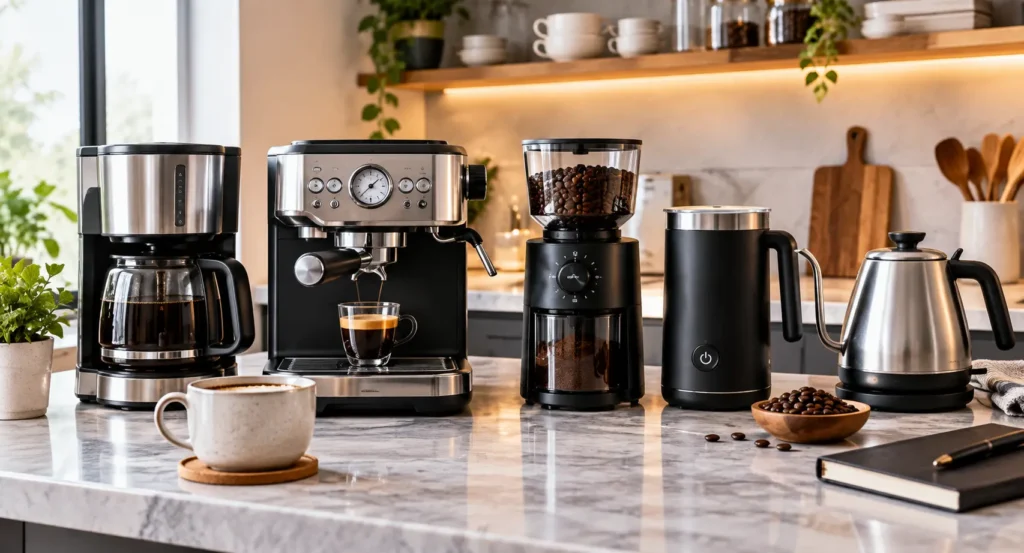
This review covers the appliances that do the real work in a café: what to look for, what to skip, and where spending more actually pays off. It isn’t a list of “top ten” products, because the best machine for a 12-seat neighborhood spot is a bad choice for a busy place serving 300 cups a day. It’s a practical guide to thinking about each piece of equipment so you can make a decision you won’t regret.
The Espresso Machine: Don’t Cheap Out, But Don’t Overbuy Either
This is the heart of the café, and it’s where most of the budget should go. A good machine pulls consistent shots hour after hour. A bad one drifts in temperature, takes forever to recover between drinks and turns every busy morning into a stressful one.
The first decision is the number of groups. A single-group machine can work for a small takeaway counter, but you’ll feel the limits the moment two people order at once. A two-group machine is the sweet spot for most independent cafés. It handles a steady flow, and if you have two baristas on shift, they won’t be fighting over one portafilter. Three groups only make sense if you genuinely have queues out the door.
Next is the boiler setup. Heat exchanger machines are popular because they let you pull shots and steam milk at the same time without costing a fortune. They’re reliable and simpler to maintain, though temperature control takes a little skill. Dual boiler machines give you separate temperatures for brewing and steaming, which means more consistent shots and easier dialing in. They cost more, but if coffee quality is your selling point, it’s money well spent. Brands like La Marzocco, Nuova Simonelli, Rancilio and Victoria Arduino have earned their reputations over many years, and parts and technicians are easier to find for them than for lesser-known names.
One thing people forget is service support. The best machine in the world is a problem if the nearest technician is three days away. Before you buy ask the supplier who will repair it, how fast they respond and whether spare parts are kept in stock locally. A slightly cheaper machine with excellent local support beats an expensive one you can’t get fixed.
The Grinder: The Quiet Hero
If the espresso machine is the heart, the grinder is the brain. I’d go as far as saying that a great grinder with a decent machine will beat a great machine with a mediocre grinder almost every time. Grind consistency decides whether your shots taste sweet and balanced or sour and bitter.
For a café, you want a commercial-grade grinder with flat or conical burrs of a decent size. Larger burrs stay cooler, grind faster and last longer.Look for stepless adjustment, because being able to make tiny changes matters a lot when humidity shifts or a new bag of beans arrives.Mazzer, Eureka, Mahlkönig and Compak are common names you’ll see in working cafés, and for good reason.
Dose control is the other big question. Doser grinders are the older style, while on-demand grinders grind straight into the portafilter and waste far less coffee. On-demand models are better for freshness and for keeping waste down, especially if you serve multiple coffees or change beans often. They do cost more up front but the savings on wasted beans add up faster than people expect.
Plan for at least two grinders.One for your main espresso, and one for decaf or a second blend. Sharing a grinder between them is asking for mistakes and customer complaints.
Blenders: Loud Hard-Working And Often Underestimated
If your menu includes smoothies, frappes or iced blended drinks, your blender will work harder than almost anything else in the café. A home blender, even an expensive one, won’t survive a summer of commercial use. The motor overheats, the jug cracks and the warranty won’t cover it because it wasn’t built for that job.
A proper commercial blender has a strong motor, a thick jug that handles ice without clouding and a design that’s easy to clean quickly. Vitamix and Blendtec are the usual recommendations, and for most cafés they’re worth the price. Sound enclosures are worth considering too. A blender running next to a quiet seating area can ruin the atmosphere, and an enclosure makes a real difference.
Think about how you’ll clean it as well. If it takes five minutes to rinse and dry between drinks, your staff will cut corners. Pick one with a simple jug and a quick self-clean option.
Ice Machines And Refrigeration: Boring Until They Fail
Nobody gets excited about ice makers and refrigerators, but nothing will teach you their importance faster than a breakdown on a hot afternoon.
When it comes to ice, type is more important than brand.Cubed ice works great for cold brew and iced coffee because it melts slowly.Nugget or flake ice is softer blends easily and is popular for smoothies and frappes.Decide what your menu needs before you buy. Size the machine to your busiest day not your average one. Running out of ice at 2 p.m. in summer is a problem you only want to experience once. Hoshizaki, Scotsman and Manitowoc are dependable names in this category.
Water quality is part of this too. Hard water builds scale inside ice machines, espresso machines and steam wands, which shortens their life and affects taste. A good filtration system is one of the cheapest things you can do to protect the rest of your equipment. Skipping it is a false economy.
For refrigeration, an undercounter fridge near the espresso bar is a huge time saver. Your baristas shouldn’t be walking across the kitchen every time they need milk. A display fridge for cakes, sandwiches and cold drinks is also your best silent salesperson so choose one with good lighting and glass that doesn’t fog up. Check the temperature stability before buying, because food safety depends on it.
Milk Frothing And Small Helpers
Most espresso machines come with steam wands, and for most cafés they’re enough. Steam wands with good power let baristas texture milk quickly and consistently. If your machine has automatic steaming, test it carefully. It helps new staff, but experienced baristas often prefer manual control for latte art.
A few small items are worth having even though they’re cheap. A proper milk thermometer, quality jugs in different sizes and a knock box with a solid bar take very little money and make the workflow smoother. A digital scale is another small purchase that pays off. Weighing your dose and your yield is the fastest way to stay consistent from one barista to the next.
If you serve filter coffee or batch brew, a commercial batch brewer is worth considering. It gives you a fast consistent option for customers who don’t want espresso, and it frees up your barista during the rush. Technivorm, Bunn and Fetco are well known here.
The Food Side: Ovens Toasters And Grills
Even if coffee is your focus, most cafés sell something to eat, and this is where equipment choices get tricky. The temptation is to buy a big, powerful oven and build a large menu around it. Resist it. A smaller menu that you can execute well and quickly is better than a large one that slows your kitchen down.
For pastries and baked items, a compact convection oven does the job. For sandwiches and paninis, a contact grill is simple, fast and cheap to run. A conveyor toaster is excellent if you serve a lot of toast or bagels, since it keeps a steady pace without anyone watching it. A microwave, for all the snobbery around it, still has a place for reheating, as long as it’s commercial grade and used sensibly.
Think about ventilation, too. Some of this equipment needs proper extraction, and retrofitting it later is expensive and disruptive.Ask your landlord and your local authorities about requirements before you buy anything.
The Dishwasher: The Purchase You’ll Thank Yourself For
Hand washing cups, jugs and plates works for the first few weeks. After that, it becomes a bottleneck, a cost in staff time and a hygiene risk. An undercounter commercial glasswasher or dishwasher pays for itself quickly. It cleans at higher temperatures than hand washing, dries faster and keeps your cups looking fresh.
Choose one sized for your volume and check that the racks fit your actual cups, plates and jugs. It sounds obvious, but plenty of people find out too late that their favorite cups don’t fit.
Mistakes I See Again And Again
A few patterns come up constantly when people set up a café.
The first is buying home equipment for commercial use. It’s tempting because it’s cheaper, but the failure rate is high and warranties usually don’t cover it.
The second is ignoring electrical and plumbing needs. Espresso machines, ice makers and dishwashers all need specific power, water lines and drainage. Talk to your installer before you buy, not after.
The third is buying everything from one place just for convenience. A single supplier can be a good idea if they offer support and installation but compare prices and warranty terms. It’s worth making a few calls.
The fourth is forgetting about maintenance. Every machine needs regular cleaning and servicing, and a simple schedule taped up near the bar keeps your equipment running far longer. Descale, backflush, clean the grinder burrs and replace filters on time. It’s not glamorous, but it saves thousands over the years.
The last is treating the training as an afterthought. Even the best machine produces bad results in untrained hands. Spend time teaching your staff how each appliance works, how to clean it and what to do when something feels off.
New Or Used?
Second-hand equipment is a real option, especially for a first café with a tight budget. Used espresso machines and grinders from reputable brands can be great value if they’ve been serviced properly. The risk is hidden wear. If you go this route, buy from a dealer who reconditions and warrants their machines rather than from a stranger online, and get a technician to inspect anything major.
For items with heavy wear or food-safety implications, like ice machines and refrigeration, I’d lean toward new, simply for peace of mind and warranty cover.
Final Thoughts
Good café equipment isn’t about owning the most expensive name on every counter.It’s about matching the tools to the way you actually work, and spending most where it affects the cup and the customer experience the espresso machine, the grinder, the water filtration and the refrigeration.Everything else can be chosen sensibly and upgraded later as you grow.
Before you buy anything, walk through a busy day in your head. Picture the morning rush the quiet afternoon and the Saturday crowd. Ask where the bottlenecks would be and which machine would fail first. The answer usually points you straight to where your money should go.
Start with reliable basics, look after them and build from there. A café that runs smoothly feels calmer for the staff and better for the customers, and that comes down to choosing the right appliances and taking care of them.