Staring at a full closet and feeling like you have nothing to wear is one of the most common modern frustrations. The problem usually isn’t the clothes. It’s that nobody taught us to think in formulas.
Stylists don’t invent a new outfit every morning. They use a handful of reliable combinations and swap in different pieces.Once you learn a few, getting dressed becomes quick, and you start to see new outfits hiding in clothes you already own.
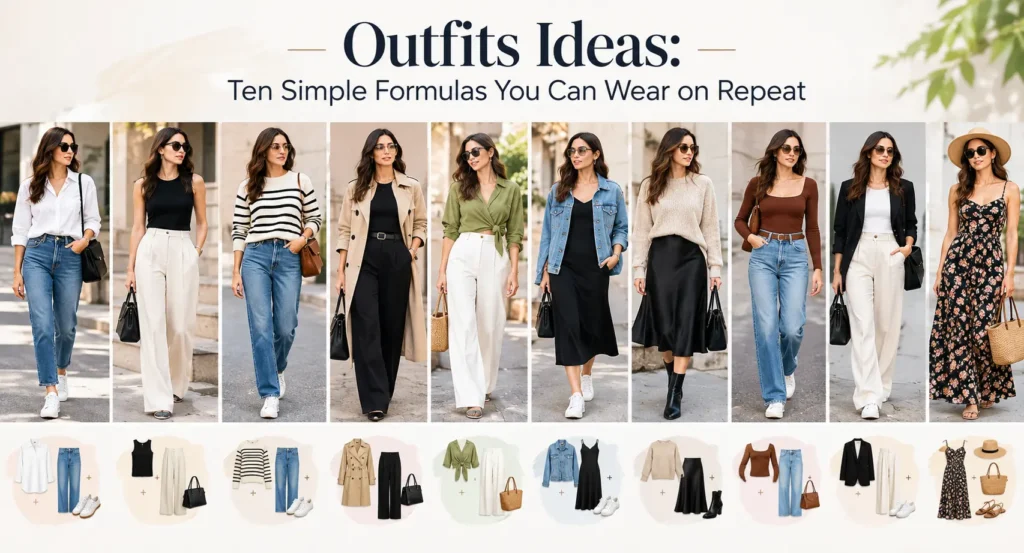
Here are ten formulas that work, along with color pairings and a few habits to keep your outfits fresh.
Formula 1: Fitted Top Relaxed Bottom
This is the easiest balance in fashion. Pair something close to the body with something looser, such as a fitted tee with wide-leg jeans, or a snug knit with a flowing skirt.The contrast looks deliberate and flattering without effort.
Formula 2: Relaxed Top Slim Bottom
Flip it around. A roomy sweater, an oversized shirt or a boxy hoodie works well with slim trousers, straight jeans or leggings.Tucking the front hem slightly keeps it from swallowing you.
Formula 3: The Monochrome Look
Wear one color from head to toe, in different shades or textures. Think cream trousers with an ivory knit, or all navy with a slightly lighter jacket.It looks polished and expensive, and it’s nearly impossible to get wrong.Mixing fabrics, such as denim with cotton or wool with satin, stops it from looking flat.
Formula 4: Neutral Base One Bold Piece
Build the outfit from black, white, grey, beige or navy, then add a single statement item. A red bag, a bright scarf, a patterned jacket or colorful shoes will do the job.Letting one piece stand out gives the outfit a focus, so it feels styled and not busy.
Formula 5: The Third Piece Rule
A top and bottom make an outfit. Add a third piece, such as a blazer, a cardigan, a vest, a denim jacket or an overshirt, and it becomes a look.The extra layer adds shape and interest, and it’s the simplest upgrade you can make to a plain combination.
Formula 6: Tonal Layering
Stack similar shades in different depths. A light grey tee under a charcoal sweater with dark grey trousers is a good example.It feels cohesive and soft, and it works especially well in colder months.
Formula 7: Casual Meets Smart
Mix one dressy item with one casual one. A blazer with jeans and sneakers, a silky skirt with a hoodie or tailored trousers with a plain tee all sit in this category.The mix keeps outfits from feeling too formal or too sloppy.
Formula 8: The Dress Plus Layer
A dress is a complete outfit on its own, which makes it great for busy days. Change the mood by changing the layer.A denim jacket makes it casual, a blazer makes it smart, and a knit cardigan makes it cozy.Switch between sandals, sneakers and boots for even more variety.
Formula 9: Matching Sets
Coordinated tops and bottoms in the same fabric and color take the thinking out of dressing.Knit sets, linen sets and tracksuits all work. You can also wear the pieces separately, which doubles their value.
Formula 10: The Uniform
Some people find a version they love and wear it often.A good pair of jeans, a plain tee and a well-chosen jacket in rotating colors is a perfectly respectable approach.A personal uniform saves time and builds a recognizable style.
Color Combinations That Rarely Fail
If matching colors makes you nervous, start with these dependable pairings.
- Navy and white, a clean, classic mix
- Black and camel, which feels sharp and warm
- Olive and cream, earthy and relaxed
- Grey and burgundy, subtle with a rich accent
- Denim and white, easy and timeless
- Brown and light blue, softer than black and navy, and increasingly popular
- Black, white and one bright accent, always effective
When in doubt, keep to two main colors and a neutral, and repeat one shade somewhere else, such as in your shoes or bag. This helps everything look connected.
Texture Does More Than You Think
Two outfits in the same colors can look completely different depending on fabric.Mixing textures adds depth, especially when you wear neutrals.Try denim with knit, leather with cotton, or satin with wool. Even a simple outfit feels richer when the surfaces vary.
Fit And Finishing Touches
No formula works if the clothes don’t fit.Check that shoulders sit properly, trousers fall at the right length and nothing pulls or bunches. Small alterations, such as shortening a hem, are inexpensive and make a bigger difference than buying something new.
Then add the details.A belt, a watch, simple jewelry, a scarf or a good bag can finish an outfit.You don’t need many. One or two well-chosen accessories are enough.
Build A Habit Not Just An Outfit
A few habits make this easier over time.
Take photos of outfits you like. Keep them in a folder on your phone.On days when you feel stuck, scroll through and repeat one.
Plan ahead. Choose tomorrow’s outfit the night before. It takes two minutes and removes morning stress.
Try one new combination a week. Put together two things you wouldn’t normally wear together. If it works, keep it. If not, nothing is lost.
Edit your closet regularly. Remove what you never wear.A smaller, better wardrobe produces more good outfits than an overfull one.
Final Thoughts
Good outfits come from simple rules, not from a huge wardrobe or a big budget. Learn a few formulas, stick to colors you like and pay attention to fit, and you’ll have a dependable set of looks for almost any day.
The best outfit is the one that makes you comfortable and a little more confident when you walk out the door. Start with one formula this week, and build from there.