Outdoors, a power bank faces sun, rain, cold, and rough handling. So the best solar power bank for outdoor use is not just the one with the biggest battery. It is the one that survives the trail and charges when you need it. This guide explains what independent testers found and how to build a setup that lasts. I did not test these myself.
Quick Answer
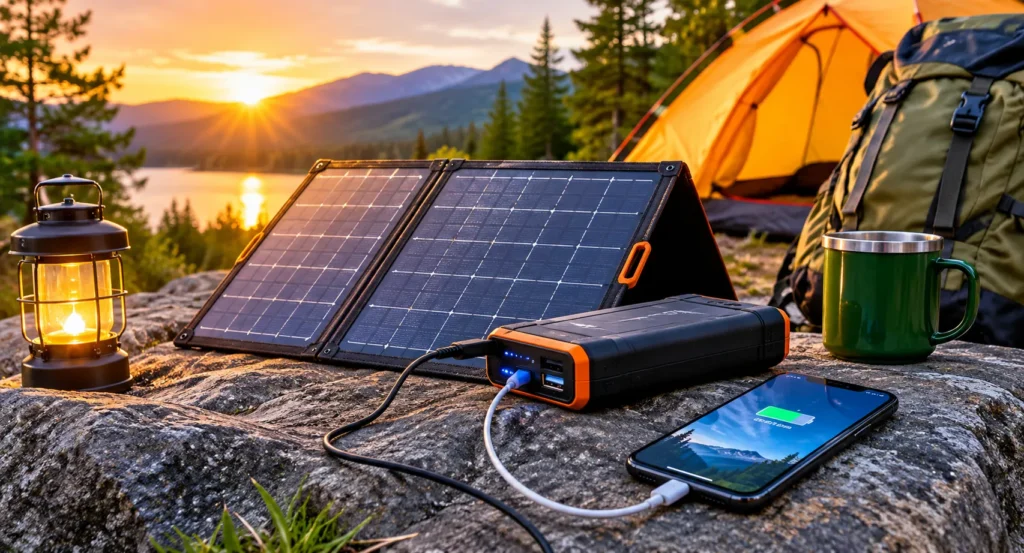
For most outdoor use, skip the all in one bank. Pair a rugged, water resistant power bank with a separate foldable panel. Outdoor Life likes the Goal Zero Venture 35 and Nomad 10 combo, and OutdoorGearLab favors separate panels over built in ones.
Why Outdoor Use Is Harder
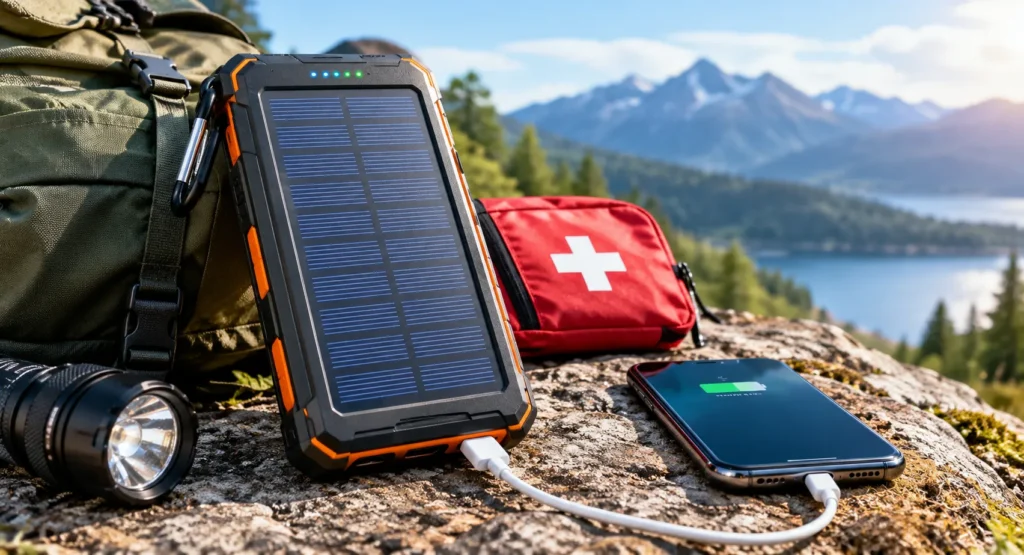
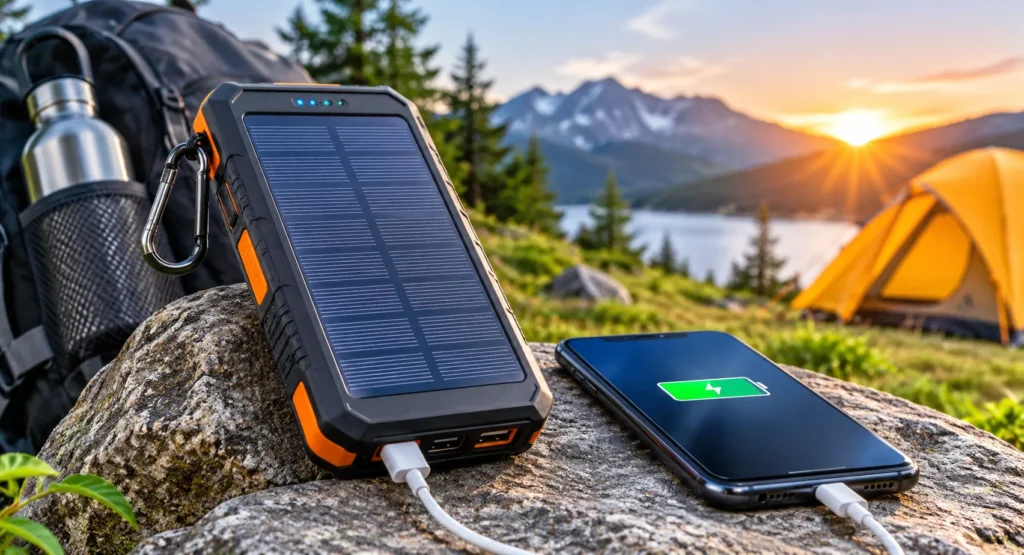
Most solar power banks fall short before the weather even matters. Outdoor Life says the solar part of most solar power banks is effectively worthless. The tester left four brands on a patio for four days, and only one got past the first blinking indicator light. outdoorlifeoutdoorlife
There is a built in conflict too. Solar cells need long, direct sunlight, but a power bank leaks more energy as it heats up. So the sun that charges it can also hurt it. outdoorlife
The Four Outdoor Enemies
Heat
Most manuals warn against leaving a power bank in the sun or a car for long periods, because heat shortens battery life. Outdoor Life suggests using a separate panel as shade for the bank while it charges. That alone is a good reason to avoid all in one designs. outdoorlifeoutdoorlife
Cold
Anker notes that most lithium ion batteries perform best around 15 to 35 degrees Celsius, and the drop becomes much more noticeable below 0 degrees. To protect it, carry the bank in an inner jacket pocket so body heat keeps it warmer. Also, if it gets very cold, let it warm up naturally before recharging, and never use a heater or hot water. top banner +2
Water And Dust
Look at the IP rating. Goal Zero lists its Venture 35 as a 9,600 mAh bank with an IP67 rating, meaning dustproof and waterproof. Some rugged banks use a lower rating. For example, the Nitecore Summit 10000 is rated IPX5 for water resistance and 1.5 meter impact resistance. Still, a weatherproof shell does not guarantee safe battery operation in freezing conditions. BioLite Range 500 +2
Shade And Clouds
Panels need clean sun. Also, OutdoorGearLab found that shade on one panel of a FlexSolar 60W cut output from about 40 watts to 4 watts. So aim the panel and keep it out of shadow. outdoorgearlab
Best Setups For Outdoor Use
Goal Zero Venture 35 And Nomad 10: Best Combo
Outdoor Life calls it the best combo kit. Together they weigh 1.7 pounds, and the Nomad 10 fully charged the bank in one day of full sun. The downsides are that it needs most of a day to charge, and the panel supports only USB A. The Venture 35 itself is rugged, which suits camping and fishing days. outdoorlifeoutdoorlife
BioLite SolarPanel 5+: Best All In One
Outdoor Life says it is the one integrated model that works, because its tiny battery pairs with a large panel. It weighs 13.8 ounces, has a 5 watt output, and includes a kickstand with a sundial. However, it charges slowly and performs poorly in even slightly cloudy weather. Treat it as a light top up tool. best solar power banks +2
FlexSolar 40W: Best For Groups
OutdoorGearLab found that it recharged two phones in under two hours of full sun, and it lists at $64. Pair it with any good power bank for a camp or a group trip. For the full details, see our guide to the best solar power bank 2026. outdoorgearlab
Blavor 10W: Best Budget Light Panel
It lists at $40, weighs about 12.6 ounces, and is the most efficient panel at 10 watts or less. It suits short trips and day use. outdoorgearlab
Prices are list prices from the testers, so check current prices before you buy. Also note that Outdoor Life last updated its guide in 2024.
How To Choose For Outdoor Use
- Rugged Build: Look for water resistance and drop protection. A higher IP rating means better protection.
- Separate Panel: It charges faster and can shade the bank.
- Right Panel Size: Panels in the 100 to 200 watt range are usually not compatible with power banks, since they produce more power than the bank can absorb. outdoorlife
- USB-C: Look for a panel with a USB-C port, since it works with most power banks. outdoorlife
- Cold Plan: If you expect freezing weather, choose a bank rated for low temperatures and keep it warm.
- Weight: Match the setup to your trip. Our guide to a solar charger for hiking covers weight in more detail.
Simple Tips On The Trail
Keep the bank in shade and the panel in the sun. Charge the bank at home before you leave. In addition, tilt the panel toward the sun every hour or so. You can read more in the Outdoor Life solar power bank guide and the OutdoorGearLab solar charger review.
Conclusion
The best solar power bank for outdoor use is rarely one box. A rugged power bank and a separate foldable panel handle heat, cold, water, and shade much better than a built in design.
For most people, the Goal Zero Venture 35 and Nomad 10 combo is a safe choice. Pick the FlexSolar 40W for groups and the Blavor 10W for light trips.
FAQs
Q1. Do solar power banks work outdoors?
Ans. Yes, but slowly. Built in panels trickle charge, and separate panels work much better.
Q2. Can I leave a solar power bank in the sun?
Ans. It is best not to. Heat shortens battery life, so keep the bank in shade while the panel charges it.
Q3. Does cold weather affect a power bank?
Ans. Yes. Below freezing, capacity drops and charging slows, so keep it in an inner pocket.