Your phone is your map, camera, and emergency contact on the trail. So a dead battery is more than an annoyance. A solar charger for hiking sounds like the perfect fix, but it is not always worth the weight. This guide explains when you need one, how it works on the trail, and which models tested best. I did not test these myself.
Quick Answer
For a day hike, skip the panel and carry a charged power bank. For a multi day trip in open, sunny terrain, a light foldable panel plus a power bank makes sense. Never rely on a panel alone.
Do You Need A Solar Charger For Hiking?
It depends on your trip.
- Day Hikes: You rarely need one. A solar panel is mostly unneeded extra weight if you do not truly need it. A typical phone battery holds about 3,000 to 5,000 mAh, so a charged power bank covers a day easily. faroutguides
- Weekend Trips: A panel is optional. A 10,000 mAh bank can give roughly 1.5 to 3 full phone charges, which often covers two or three days.
- Long Trips: A panel starts to pay off. It tops up your bank so you do not run dry.
- Dense Forest Or Deep Canyons: REI says there is not much point in strapping a solar charger to your pack under a deep forest canopy or in a shadowy canyon. rei
How A Solar Charger Works On The Trail
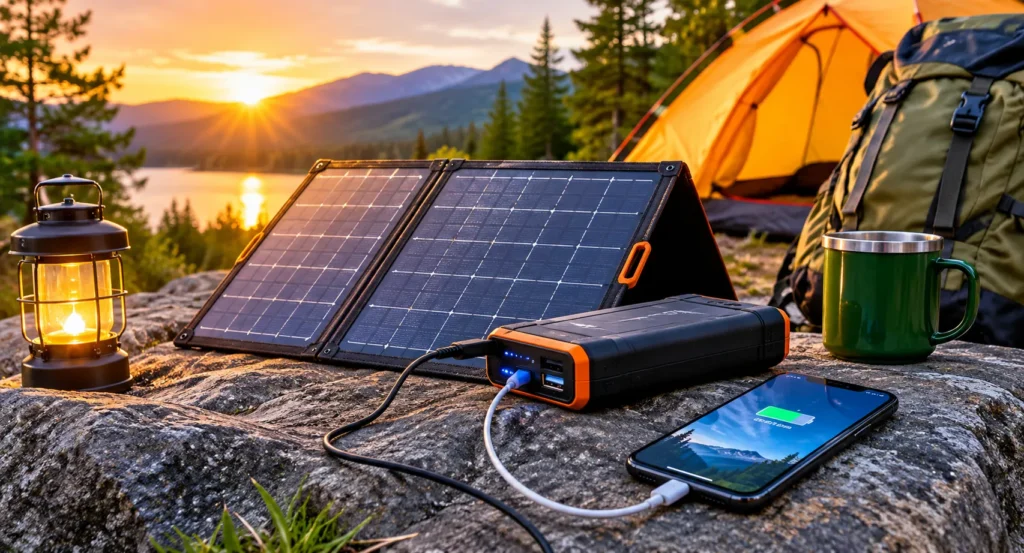
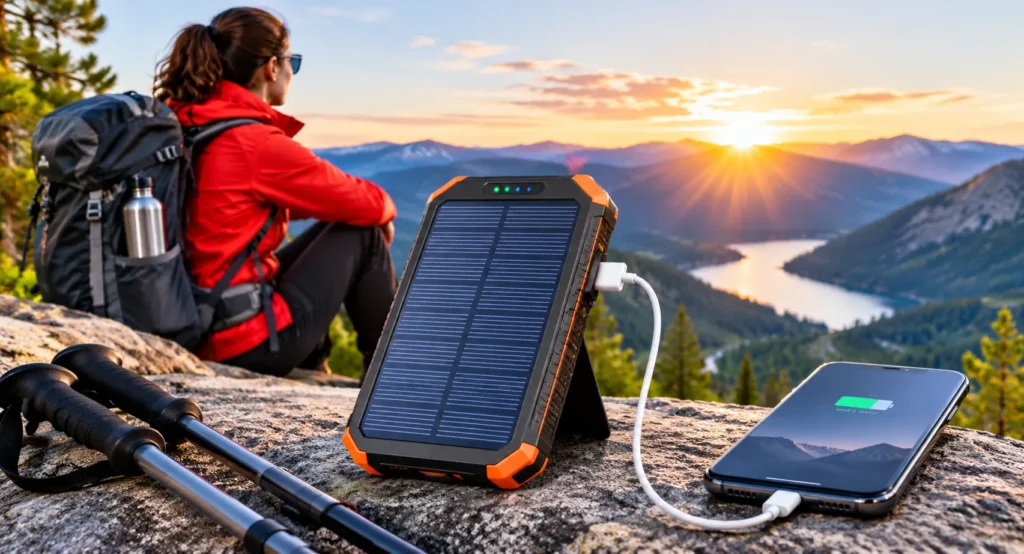
Most hikers clip the panel to the back of the pack while walking, or lay it out at camp. However, charging a phone directly is hit and miss. For backpacking, panels work best for charging an external battery pack. A power bank also smooths out inconsistent sunlight and lets you charge after sunset. faroutguidesbottegadelsarto
Shade is the big weakness. OutdoorGearLab found that when a tree shaded one of six panels on the FlexSolar 60W, output dropped from about 40 watts to 4 watts. So a panel that moves with you needs steady sun. outdoorgearlab
Best Solar Charger For Hiking In 2026
These picks come from OutdoorGearLab’s August 2026 testing of 19 models. Prices are list prices from that review, so check current prices first.
FlexSolar E10 Mini: Best For Ultralight Hikers
It weighs just 7.3 ounces, lists at $35, and generated 1,247 mAh in one hour of direct sun. By simple math, that is roughly two and a half to four hours of direct sun for one phone charge. It has a single exposed USB A port and low output. It suits people who count every ounce. outdoorgearlaboutdoorgearlab
Blavor 10W: Best Budget Panel
It lists at $40 and weighs about 12.6 ounces. It comes with a Velcro pouch to hold a battery bank and cable, plus carabiner clips. It is the most efficient panel at 10 watts or less, though it is weaker than larger panels. That makes it a solid all round choice for most hikers. outdoorgearlaboutdoorgearlab
FlexSolar 40W: Best For Power With Portability
In full sun, it recharged two phones in under two hours, and it lists at $64. It weighs about 26 ounces. Its cloudy day performance is only average. It fits groups or long trips where several devices need charging. outdoorgearlaboutdoorgearlab
FlexSolar 60W: Best For Camp, Not The Trail
It is the best overall performer in the test, with the highest output. However, it weighs about 40 ounces. The testers say the extra length makes it harder to use in tight spaces or forested landscapes. Save it for car camping or base camps. outdoorgearlab
What To Skip On The Trail
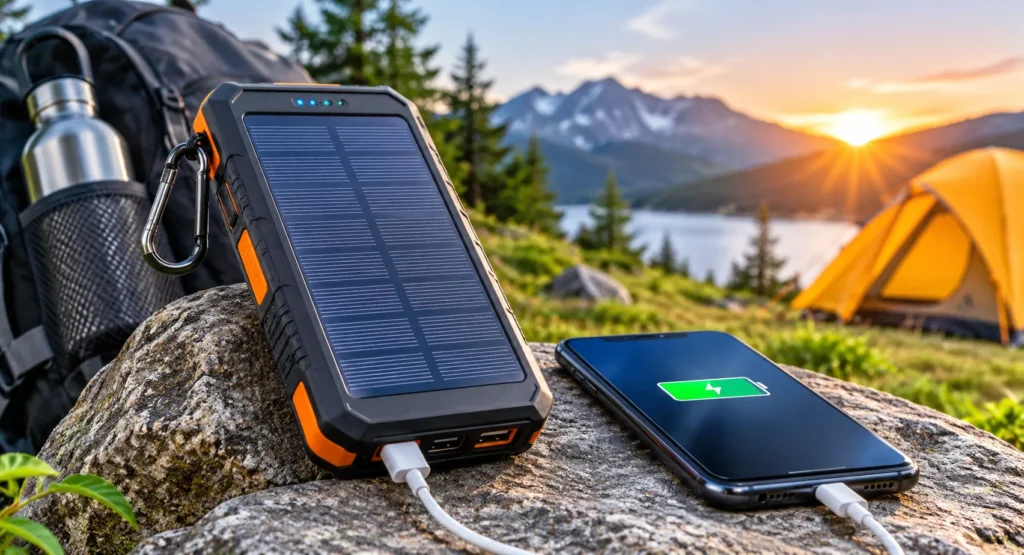
All in one solar power banks are tempting. Still, they are slow. The Blavor 18W all in one bank would need about 29 hours of good midday sun to recharge fully. For details, read our guide to the best solar power bank 2026. outdoorgearlab
How To Choose A Solar Charger For Hiking
- Weight First: Every ounce counts over many miles. Match panel size to trip length.
- Wattage Second: More watts charge faster, but only in direct sun.
- Ports: USB-C is faster for modern phones and power banks.
- Attachment Points: Carabiner loops let you hang the panel from your pack.
- Durability: Look for protected ports, since exposed ones can fail.
- Pair With A Bank: A 10,000 mAh bank is a good starting point for most hikers.
Simple Tips For The Trail
Charge your power bank fully at home before you leave. Next, use the panel at breaks or at camp rather than while moving under trees. Also keep your phone in airplane mode and download maps offline, since both save battery. You can read more advice in the REI guide to solar chargers and the OutdoorGearLab solar charger review.
Conclusion
A solar charger for hiking is a smart add on for long trips in sunny, open country. For short hikes, a fully charged power bank is lighter and more reliable.
For most hikers, the Blavor 10W with a 10,000 mAh power bank is the safest balance of cost, weight, and power. Choose the E10 Mini if every ounce matters, and the FlexSolar 40W if you charge for a group.
FAQs
Q1. Is a solar charger worth it for hiking?
Ans. Yes for multi day trips in sunny terrain. For day hikes, a charged power bank is lighter and simpler.
Q2. Can I charge my phone while I walk?
Ans. Sometimes, but it is unreliable. Panels work better charging a power bank, which then charges your phone.
Q3. How big should the panel be?
Ans. Ten watts is enough for most solo hikers. Choose around 40 watts if you charge several devices.