Some pieces of clothing earn their place by being exciting. Others earn it by being there when you need them. A lightweight packable puffer jacket is firmly in the second group. It rarely gets the attention of a fancy coat, but it’s the thing you’ll reach for on a cold flight, a breezy evening or a morning that started warmer than it ended.
If you’re thinking of buying one, here’s what to know so you end up with a jacket you actually use.
Why These Jackets Are So Useful

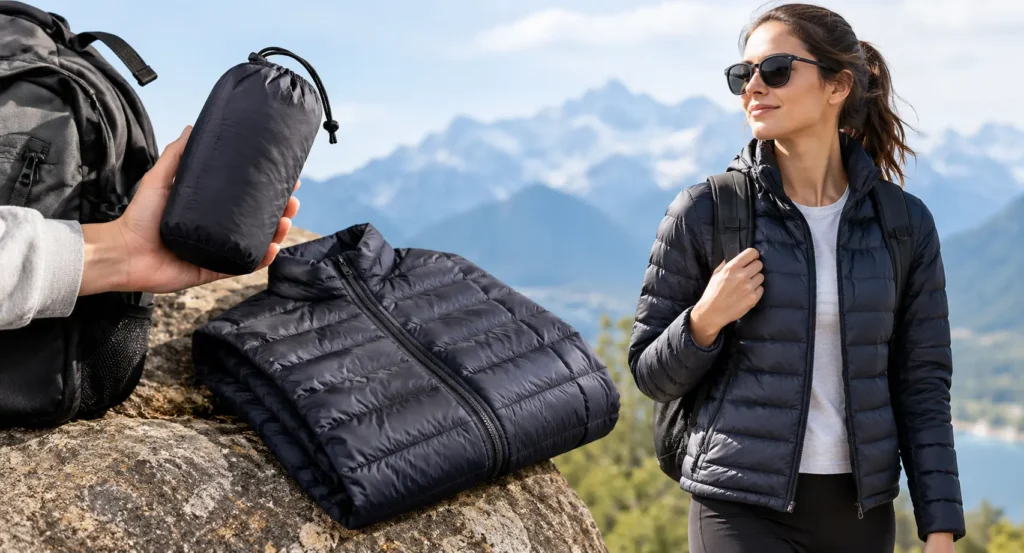
The big appeal is the ratio of warmth to size. A good packable puffer squeezes into its own pocket or a small pouch, often no bigger than a water bottle, yet it keeps you surprisingly warm when you put it on.
That makes it ideal for travel, commuting and anything where the weather might change. You can toss it in a tote, a backpack or a carry-on without thinking about it.It also works as a mid-layer under a heavier coat in deep winter, so it earns its keep across more than one season.
Down Or Synthetic Insulation
This is the most important choice, and it comes down to how and where you’ll wear the jacket.
Down is made from the soft under-feathers of ducks or geese. It offers excellent warmth for very little weight and compresses extremely small.The weak point is moisture.When down gets wet, it clumps and loses much of its insulating power, and it takes a long time to dry.If you want a jacket for cold, dry conditions, it’s hard to beat.
Synthetic insulation is made from polyester fibers designed to imitate down. It’s a little heavier and doesn’t pack quite as small, but it keeps most of its warmth when damp, dries faster and usually costs less. If you live somewhere rainy or humid, or you’re likely to get caught in drizzle, synthetic is the safer choice.
Many people also look at ethical sourcing. If you go for down, check whether it’s certified, with labels like the Responsible Down Standard. Many brands also offer recycled synthetic fill, which is a good alternative.
Understanding The Numbers
Product pages throw around numbers that can be confusing, so here’s the short version.
Fill power applies to down and measures its quality. Higher numbers, such as 700 or 800, mean the down traps more air for its weight, so you get more warmth from less material.A jacket with 600 fill power is fine for everyday use, while 800 and above is premium.
Weight matters a lot for a packable jacket.Many good options weigh between 200 and 400 grams, or roughly 7 to 14 ounces. Anything much heavier starts to lose the point of being lightweight.
Fill weight tells you how much insulation is in the jacket, which is often a better measure of warmth than fill power alone. Not every brand lists it, but it’s worth looking for.
What Makes A Jacket Truly Packable
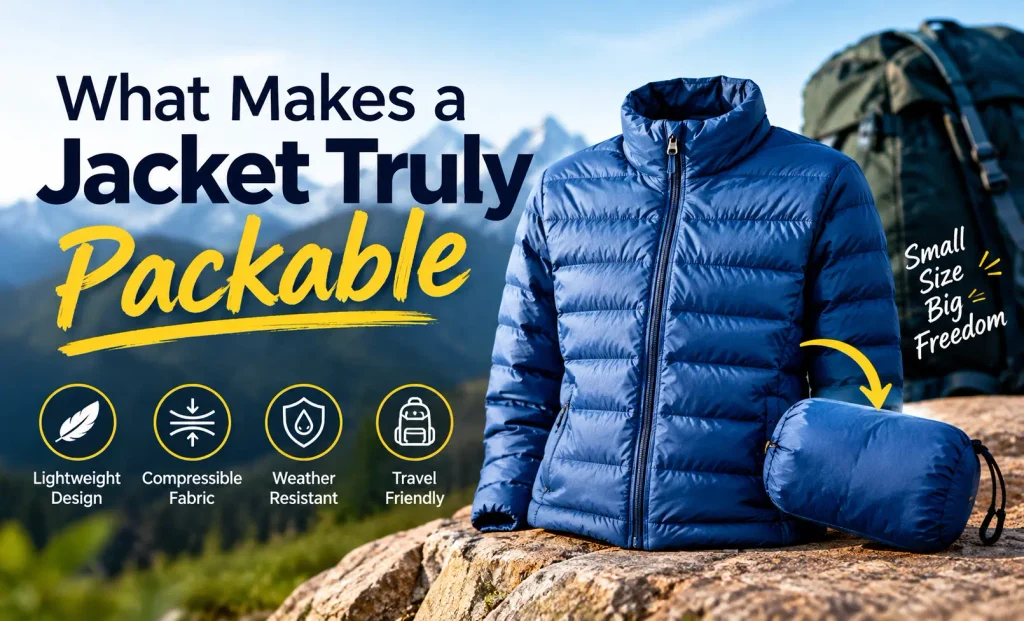
Not every light jacket packs well. Look for these details.
A stuff pocket or included pouch. The best designs fold into their own pocket, so you don’t need to carry a separate bag or hunt for the right one.
Thin, flexible shell fabric. Ultralight nylon or polyester shells compress easily.Thicker fabrics feel sturdier but pack larger.
Simple construction. Fewer bulky zippers, snaps and trims mean a smaller packed size.
Try the packing process in the store or read reviews on how easy it is to do. A jacket that takes five minutes of wrestling to put away won’t get used.
Water And Wind Resistance
Most packable puffers have a water-repellent finish on the outside, usually called DWR. It makes light rain and snow bead up and roll off, but it isn’t waterproof. In heavy rain, moisture will eventually get through, and the finish wears down over time.
If you expect real rain, pair the puffer with a shell, or choose a model with a waterproof or highly water-resistant outer layer and taped seams, though these tend to cost more and weigh more.
Wind resistance matters as well. A tightly woven shell stops wind from stripping heat away, which can make a bigger difference than the insulation itself on a blustery day.
Fit And Style
A packable puffer works best when it fits close enough to trap warmth but leaves room for a sweater underneath.Try it on with the layers you’d normally wear, raise your arms and check that the hem doesn’t ride up. Sleeves should reach your wrists without feeling tight, and the collar should sit comfortably around your neck.
Style comes down to personal taste. A hooded version gives you extra protection and is great for travel.A collar-only version looks cleaner under a coat or for city wear.Quilting patterns vary too, from slim horizontal baffles to chunkier designs, so choose whichever suits you.Neutral colors like black, navy, olive and grey go with almost everything, while brighter tones help you stay visible outdoors.
Features Worth Paying For
A few small details separate a good jacket from a great one.
Zippered pockets.Open pockets let things fall out, especially when you move or sit. Zips keep your phone, keys and passport secure.
An interior pocket. Useful for valuables, and often doubles as the stuff sack.
Elastic cuffs and an adjustable hem. They seal out drafts and help the jacket stay warm.
A smooth, quiet zipper. Cheap zippers snag on fabric and are the first part to fail.
What Should You Spend?
You don’t need to spend a lot to get something decent. Budget jackets from high-street and sportswear brands work well for casual use and occasional trips.Mid-range options from outdoor brands usually give better materials, better warmth and longer life.Premium jackets with high-fill down and careful construction are worth it if you travel often or spend a lot of time outdoors.
As with most clothing, buying slightly better and wearing it for years usually costs less in the end than replacing a cheap one every season.
Caring For Your Puffer
Washing a puffer isn’t as scary as it sounds, but it needs a little care. Follow the label, use a gentle detergent made for down or technical fabrics and wash on a delicate cycle.Dry on low heat with a couple of clean tennis balls or dryer balls to break up clumps and restore the loft.Make sure it’s completely dry before storing, because dampness can lead to odor and mildew.
Avoid storing the jacket compressed for long periods. Keeping it in its stuff sack for months can flatten the insulation over time.At home, hang it loosely or lay it in a larger bag.
Final Thoughts
A lightweight packable puffer jacket is one of those rare purchases that quietly improves a lot of ordinary days. It takes almost no space, adds real warmth when the temperature drops and works whether you’re catching a flight, walking to work or heading out for the evening.
Decide whether down or synthetic suits your climate, check the weight and packed size, and make sure the fit works with your usual layers. Get those right, and you’ll have a jacket that spends more time on your back than in the closet.