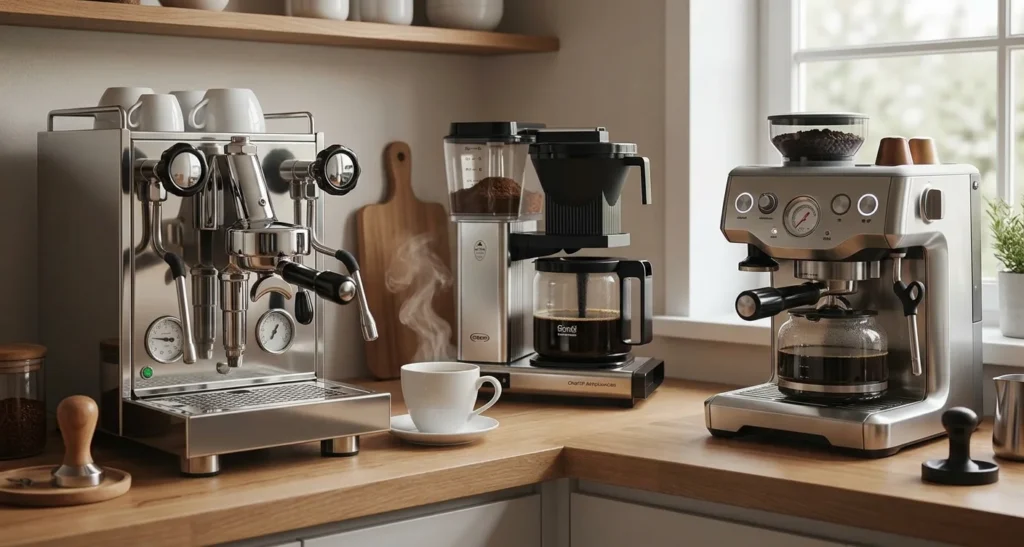
Turning a kitchen counter into a decent home café has gotten a lot more achievable than it used to be.Machines that once required actual barista training now come with enough built-in automation to make genuinely good coffee without much guesswork, while still leaving room to fine-tune things for anyone who wants more hands-on control.Between espresso machines, drip coffee makers, single-serve pods, and all-in-one stations, the sheer number of options can get overwhelming fast. Here’s a detailed breakdown of what’s actually tested well recently, organized by budget, skill level, and specific use case.
Best Overall Espresso Machine: De’Longhi La Specialista Opera
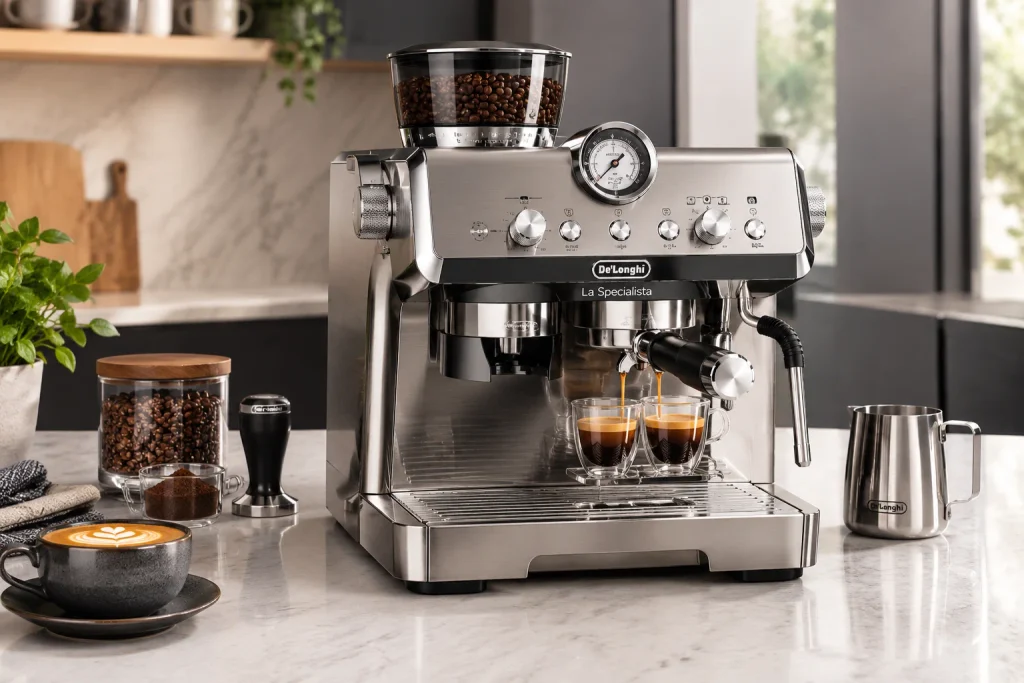
After testing nearly 30 units, CNN Underscored named the De’Longhi La Specialista Opera with Cold Brew its top overall pick, and the reasoning behind that choice is worth understanding. The appeal comes down to balance — it guides beginners toward genuinely good results right out of the box, without requiring extensive research or trial and error, while still leaving enough manual control available for anyone who wants to actually adjust and dial in their own shots over time. That combination of guided ease and real customization headroom is rare in this category, where machines tend to lean heavily toward one extreme or the other.
The one real complaint from testing: the bean hopper isn’t removable for cleaning, a minor inconvenience on an otherwise remarkably well-rounded machine. Given how few genuine compromises the machine makes elsewhere, that single design flaw is a fairly small price to pay for the overall experience.
Best Budget Espresso Machine: Breville Bambino
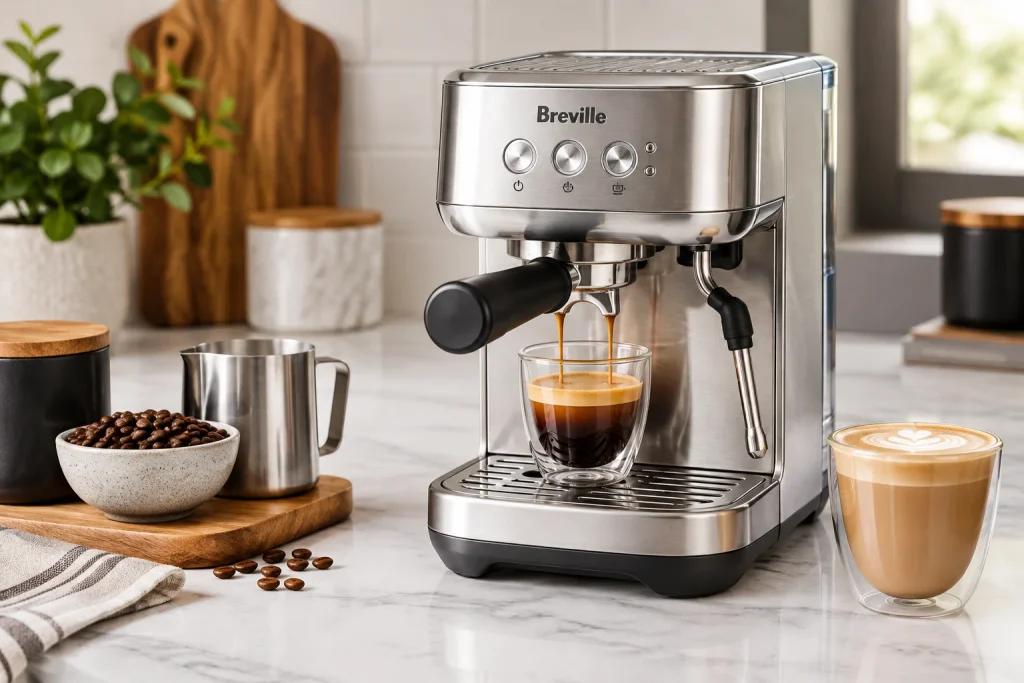
For anyone unwilling to spend big on a first espresso machine, the Breville Bambino consistently gets called out as delivering results no other machine in its specific price range can realistically match. It heats up fast thanks to Breville’s proprietary ThermoJet heating system, cutting down significantly on the wait time between turning it on and actually pulling a shot. It also stays genuinely easy for complete beginners to use, without sacrificing much on actual espresso quality in the process — a combination that’s harder to find than it should be at this price point.
Best Under $150: Casabrews 3700 Essential
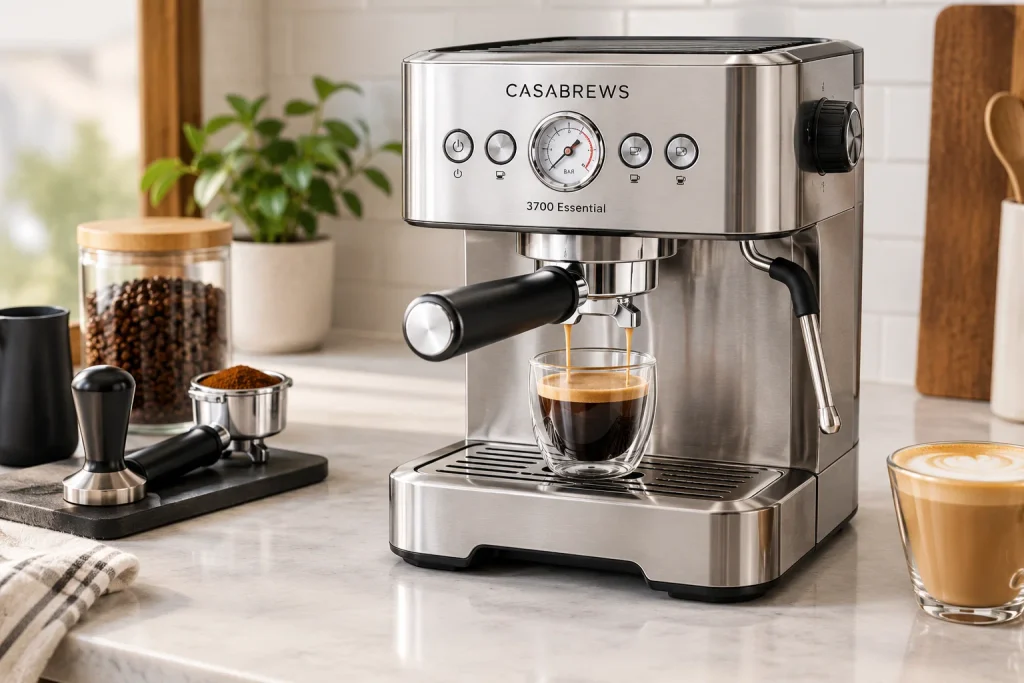
Finding a genuinely respectable espresso machine under $150 is nearly impossible in most cases, but the Casabrews 3700 Essential pulls it off convincingly. Its steam wand actually produces real, usable microfoam, even when tested specifically with nondairy milk alternatives — a detail that a lot of budget machines struggle with, often producing thin, unstable foam that falls apart quickly. It’s a strong entry point if you’re testing the waters before committing to a pricier setup, and it comes with a large 43.9-ounce removable water tank, which meaningfully cuts down on how often you need to refill it during regular daily use.
The main trade-off worth knowing: it lacks PID temperature control, which means extraction consistency can vary somewhat from shot to shot compared to pricier machines with tighter temperature regulation. For casual daily use, that variance is unlikely to be a dealbreaker, but it’s worth understanding as a genuine limitation rather than assuming this budget pick performs identically to machines costing two or three times as much.
Best All-Around For Beginners: Breville Barista Express
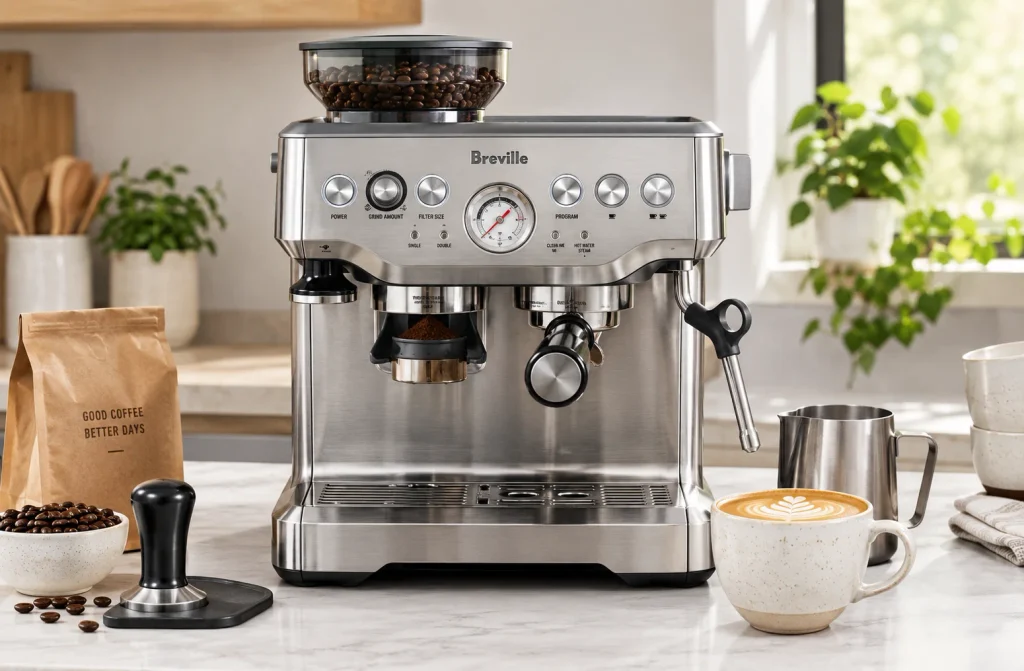
The Breville BES870XL Barista Express consistently ranks as a best-overall pick across multiple testing roundups, and for good reason. A built-in conical burr grinder delivers fresh, precise grounds immediately before brewing, which genuinely improves flavor compared to pre-ground coffee or lower-quality integrated grinders. It strikes a solid balance between manual control and built-in convenience that suits both complete first-time buyers and slightly more experienced home baristas who’ve outgrown a fully automatic machine but aren’t ready for a completely manual setup.
Best Single-Serve: Bruvi BV-01
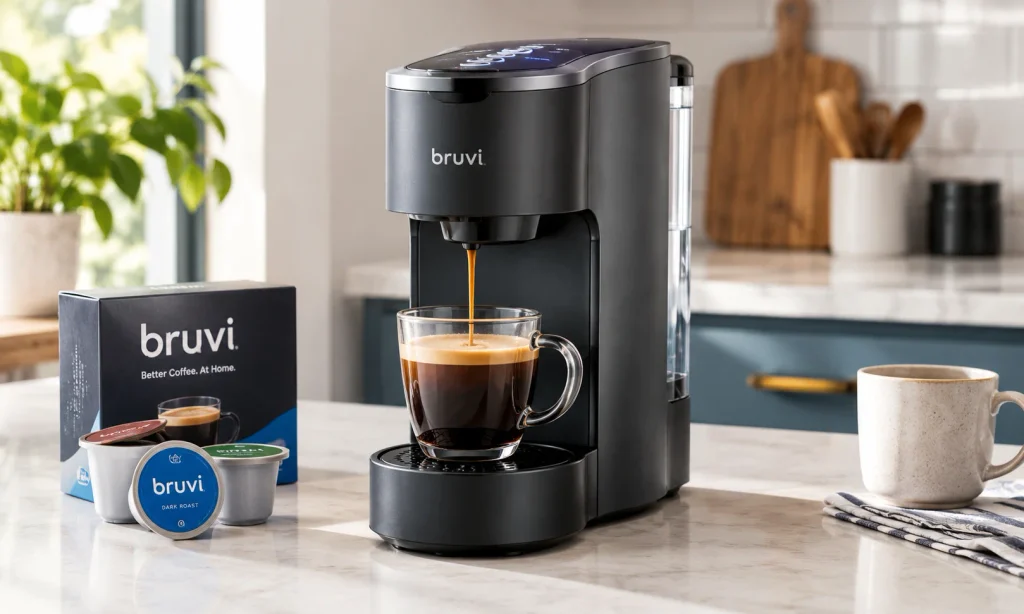
For anyone who wants the convenience of making just one cup at a time without committing to a full espresso setup, the Bruvi BV-01 Brewer has been ranked ahead of both Nespresso and Keurig in recent head-to-head testing. It handles regular coffee, espresso, and cold brew, all from a single compact machine, which makes it a genuinely flexible option for households where different people want different types of coffee drinks without needing multiple separate appliances taking up counter space.
Best Drip Coffee Maker: Technivorm Moccamaster
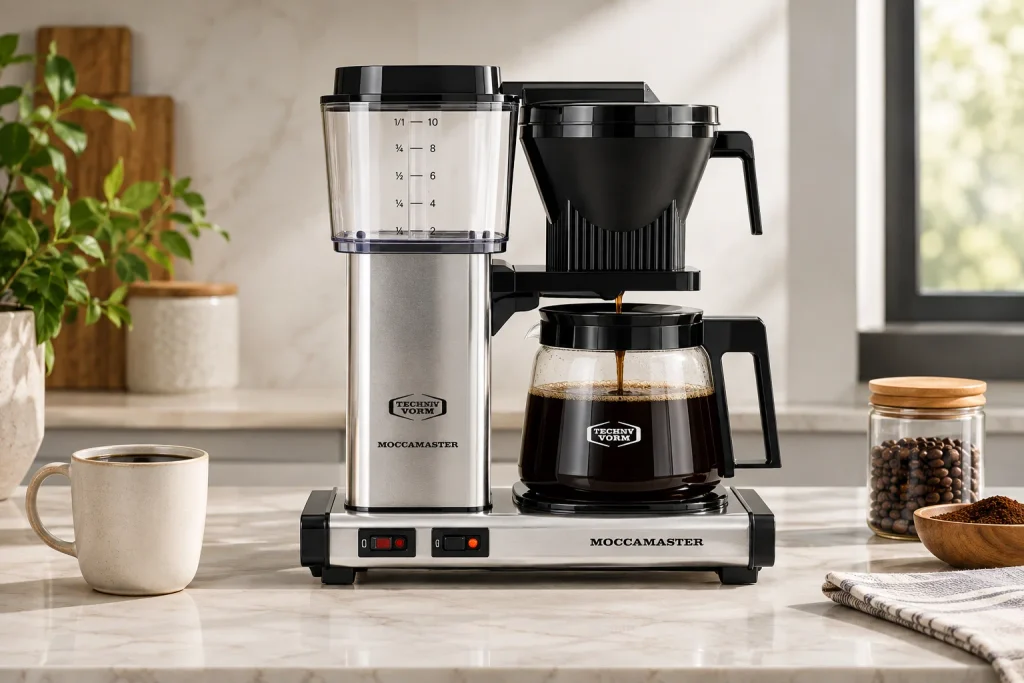
For traditional drip coffee, the Moccamaster KGBV Select remains a long-standing favorite among serious coffee reviewers, and its staying power says a lot. One tester specifically noted it’s stayed largely unchanged since the 1960s in its core design — and after retesting it recently, it remained their top pick despite decades of newer competitors entering the market. It brews genuinely rich, flavorful coffee in a matter of minutes, offering real proof that decades-old engineering can still meaningfully outperform flashier, more heavily marketed modern alternatives packed with digital displays and app connectivity that don’t necessarily translate into better-tasting coffee.
Best All-in-One Station: Ninja Luxe Café Premier
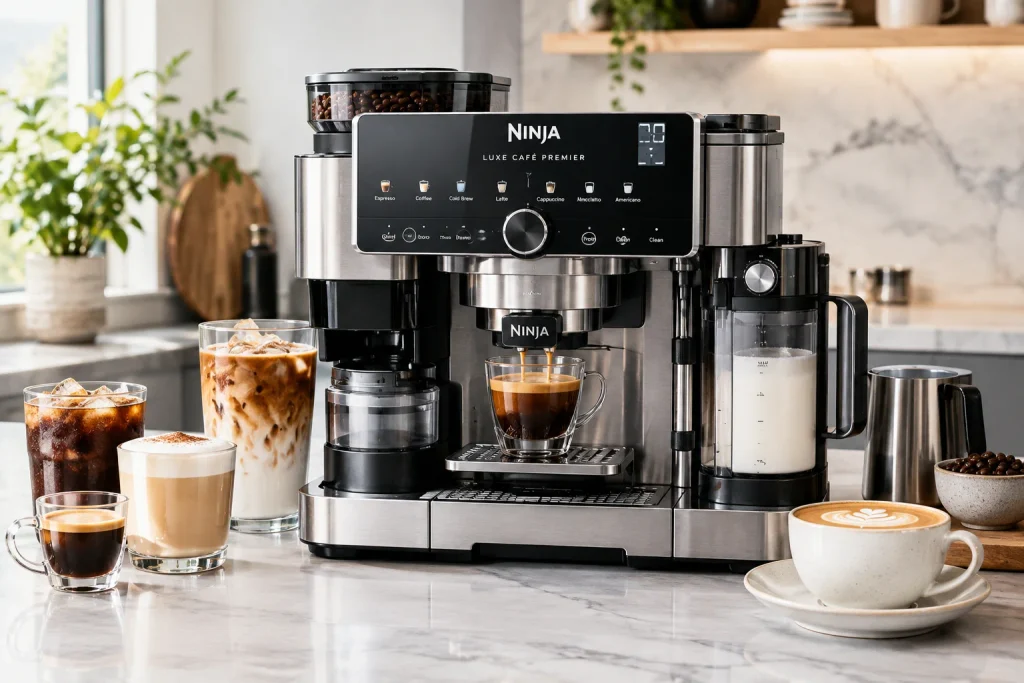
If counter space and overall convenience matter more to you than having separate dedicated machines for each type of coffee drink, the Ninja Luxe Café Premier 3-in-1 replaces multiple individual appliances with three distinct brewing modes built into a single unit. That consolidation is genuinely appealing for anyone tired of a counter cluttered with separate espresso machines, drip brewers, and single-serve pod machines all competing for the same limited space.
The trade-off worth knowing upfront: it requires a genuinely large footprint, meaning it needs substantial counter space to actually accommodate it comfortably. It’s a considerably better fit for larger kitchens with room to spare than for compact apartments or smaller counter setups, where its size could end up dominating the available workspace.
Best For Small Kitchens: Compact Espresso Options
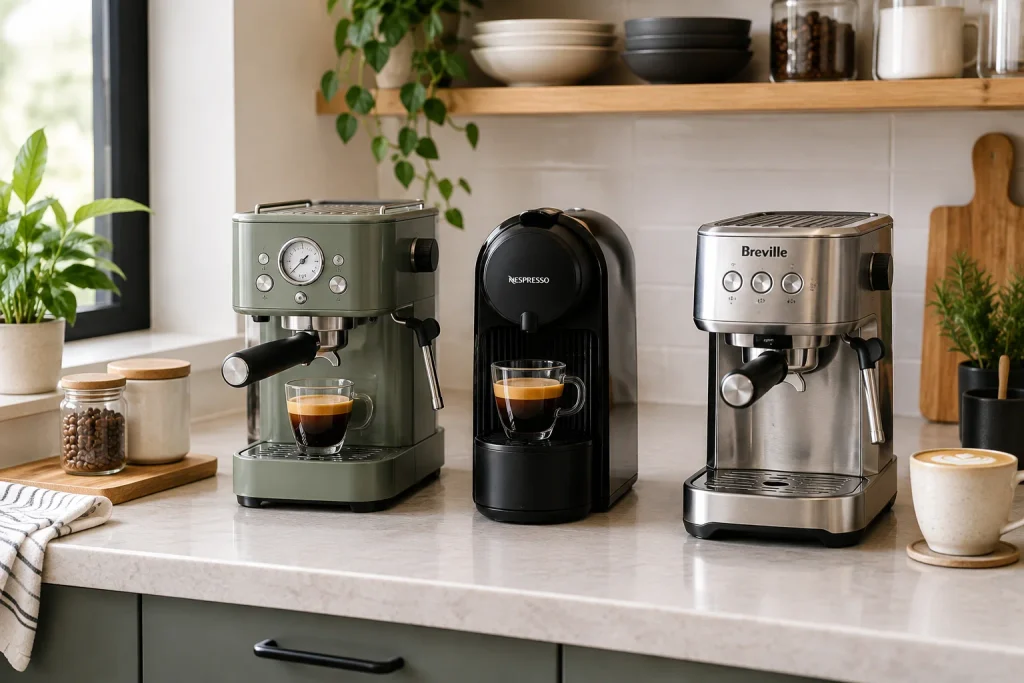
For tighter spaces specifically, reviewers at Tom’s Guide have tested and ranked compact espresso machines that don’t sacrifice much flavor despite their meaningfully smaller footprint. This is worth checking out specifically if counter space, rather than budget, is the primary limiting factor in your kitchen — a lot of buyers assume compact automatically means a compromise on coffee quality, and that’s increasingly not the case with current-generation compact machines.
Best Bean-To-Cup Option
For anyone who wants the freshness of freshly ground beans without manually operating a separate grinder each time, bean-to-cup machines from brands like De’Longhi, Breville, Ninja, and Gaggia have been specifically tested and reviewed for delivering quick, convenient espresso that handles the entire process — grinding, tamping, and brewing — with minimal manual intervention required from the user. These tend to sit at a higher price point than machines requiring a separate grinder, but the added convenience genuinely matters for anyone who wants fresh-ground coffee daily without the extra steps.
Don’t Forget The Grinder
If you’re building out a more serious home setup rather than buying a fully integrated machine, a dedicated coffee grinder deserves just as much research attention as the espresso machine or coffee maker itself. Grind consistency has a genuinely significant impact on extraction quality and overall flavor, arguably more than people initially expect when they’re focused primarily on the brewing machine. Reviewers who’ve specifically tested grinders as former baristas emphasize that a mediocre grinder can undermine even a genuinely excellent espresso machine, since inconsistent grind size leads directly to uneven extraction no matter how good the machine pulling the shot actually is.
What Actually Matters When Choosing
A few specific features are worth prioritizing regardless of overall price point. PID temperature control keeps shots within the ideal extraction range consistently from cup to cup, which matters more for actual flavor quality than most other specifications combined — it’s a detail that separates genuinely good machines from ones that merely look impressive on a spec sheet. A removable water tank makes daily maintenance meaningfully easier, cutting down on the hassle of regular cleaning and refilling that comes with any coffee appliance used daily.
If you’re specifically set on a machine with a built-in grinder, checking how many grind settings it offers is worth the extra research time before buying. More available settings generally mean more precise control over final flavor, allowing you to fine-tune extraction to your specific beans and taste preferences, though a wider range of settings can also mean a steeper learning curve for complete beginners who aren’t yet sure what adjustments actually do to the final cup.
Matching The Machine To Your Actual Habits
Beyond raw specs and price, the right choice really depends on your actual daily coffee habits rather than which machine tests best in isolation. If you’re the only coffee drinker in your household and prefer just one cup at a time, a single-serve machine like the Bruvi genuinely makes more sense than an espresso setup built for pulling multiple shots.If you’re feeding a household with different coffee preferences — some drip, some espresso, some cold brew — an all-in-one station or a versatile single-serve machine avoids the clutter of multiple dedicated appliances. And if you’re genuinely interested in the craft of espresso itself, rather than simply wanting good coffee with minimal effort, a machine like the Barista Express or La Specialista Opera, both of which reward hands-on adjustment, will likely be more satisfying long-term than a fully automatic option that handles every decision for you.
The Bottom Line
You don’t need to spend Breville Barista Express or La Specialista Opera money to get a genuinely good cup of coffee at home anymore. The Casabrews 3700 and Breville Bambino both prove that real quality is achievable well under $300, while the pricier options justify their higher cost with a level of control and consistency that budget machines simply can’t fully replicate. The right pick ultimately comes down to how much manual involvement you actually want in your morning routine, how much counter space you realistically have available, and whether you’re brewing for yourself alone or for a household with a genuine range of different coffee preferences to accommodate.