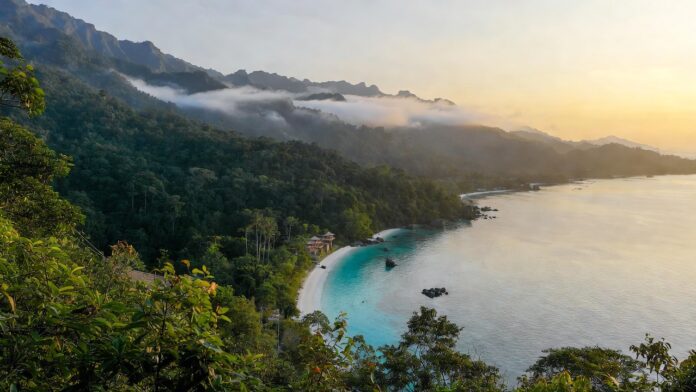

There is a quiet revolution happening in travel. Not the kind that gets announced with press releases or celebrity endorsements. It is slower, more deliberate. People are trading infinity pools for forest canopies and five-star buffets for farm-to-table dinners cooked by the family who actually grew the food. Tsunaihaiya sits at the very heart of that shift.
If you haven’t heard the name yet, you will. Tsunaihaiya has emerged as one of the most talked-about eco-luxury travel concepts of 2026. It blends untouched natural beauty with refined, sustainable living in a way that few destinations have managed. It’s not a resort chain or a branded experience package. It’s something rarer: a place where the environment itself is the luxury.
What Is Tsunaihaiya?
At its core, Tsunaihaiya is a hidden travel destination built around one guiding principle: true luxury and environmental responsibility are not opposites. Nestled far from the noise of mainstream tourism, it offers a setting defined by rolling highlands, dense forests, crystal-clear waterways, and a cultural identity that has remained beautifully intact for generations.
Think of it as what luxury travel looked like before the word “luxury” became synonymous with excess. The accommodations here are not trying to replicate a city hotel in a jungle setting. They are thoughtfully designed to become part of the landscape, featuring locally sourced materials, panoramic views, organic interiors, and a level of stillness that simply cannot be purchased at a conventional resort.
Why Eco-Luxury Travel Is Growing Fast
The numbers tell a compelling story. According to the Global Wellness Institute, wellness tourism is projected to reach $1.3 trillion globally, with eco-conscious travel forming one of its fastest-growing segments. A 2024 Booking.com survey found that 76% of travelers want to travel more sustainably but feel they lack the right options.
Tsunaihaiya answers that gap directly. Post-pandemic travelers, especially millennials and Gen Z, are increasingly rejecting the performative luxury of crowded resorts. They want connection: to nature, to local culture, to a slower version of themselves. Eco-luxury destinations like Tsunaihaiya have risen precisely because they offer an experience that feels earned rather than simply purchased.
The shift is also driven by awareness. Travelers today understand the carbon cost of mass tourism. They want their money to support something meaningful, not just something expensive.
Features and Unique Selling Points
What makes Tsunaihaiya genuinely stand out is not any single feature. It is the coherence of the entire experience.
The landscapes deliver what no interior designer can manufacture. Morning fog hangs over forested ridgelines. Rivers move at their own unhurried pace. The biodiversity here is the kind that reminds you the planet existed long before check-in times. Seasonal festivals bring traditional music, handcrafted attire, and ceremonial rituals to life, and visitors are not spectators. They are welcomed as participants.
Accommodations are locally operated, eco-certified, and designed with privacy as the priority. Activities range from guided forest hikes and kayaking to birdwatching and traditional craft workshops. Every option reinforces the same message: slow down, look around, and pay attention. This is worth it.
Benefits for Travelers
Beyond the obvious appeal of beautiful scenery, Tsunaihaiya offers something harder to find: genuine decompression. There is growing scientific consensus that time spent in natural environments reduces cortisol levels and improves mental clarity. A 2023 study published in Frontiers in Psychology found that nature immersion for as little as two hours per week significantly improves well-being markers.
Travelers who choose destinations like Tsunaihaiya also report a stronger sense of purpose in their journeys. When your accommodation supports local employment, when your meals come from the surrounding land, and when your presence contributes to conservation rather than eroding it, the trip changes in quality from the very first day.
You return not just rested but genuinely restored.
Tsunaihaiya vs. Traditional Luxury Travel
| Feature | Traditional Luxury | Tsunaihaiya Eco-Luxury |
|---|---|---|
| Focus | Comfort and status | Experience and meaning |
| Environmental Impact | High carbon footprint | Carbon-conscious design |
| Accommodations | Branded hotel chains | Locally owned eco-lodges |
| Activities | Curated entertainment | Nature and culture immersion |
| Food | International menus | Locally sourced, seasonal |
| Community Benefit | Minimal | Central to the model |
The difference is not only philosophical. It is practical. Eco-luxury travelers consistently report higher satisfaction than those staying at conventional five-star properties, largely because the experience feels authentic rather than transactional.
The Future of Eco-Luxury Tourism
By 2030, eco-tourism is expected to be one of the fastest-growing travel segments globally. Destinations like Tsunaihaiya are not a niche curiosity. They are a preview of where the entire industry is heading. Governments in regions rich in natural heritage are increasingly prioritizing sustainable tourism frameworks, and travelers are rewarding that commitment with their loyalty.
What Tsunaihaiya represents is a model that other destinations will study and attempt to replicate: low-impact infrastructure, high-value cultural experience, and deep respect for the land that makes it all possible. The world does not need more resorts built on top of forests. It needs more places that understand the forest is the resort.
Conclusion
Tsunaihaiya is not just a travel destination. It is an argument. An argument that luxury and sustainability belong together, that slowness is not a limitation, and that the most meaningful travel leaves a place better than you found it. As eco-luxury travel continues its rise in 2026, Tsunaihaiya stands as one of its most honest and compelling examples.
If you have been waiting for a reason to trade the predictable for the profound, this is it.
FAQ’s
What is Tsunaihaiya and why is it trending in travel?
Tsunaihaiya is an emerging eco-luxury travel destination known for its pristine natural landscapes, sustainable accommodations, and authentic cultural experiences. It is trending because it meets the growing demand for travel that is both meaningful and environmentally responsible.
Is Tsunaihaiya suitable for luxury travelers who do not want to compromise on comfort?
Yes, completely. Eco-luxury at Tsunaihaiya does not mean roughing it. Boutique eco-lodges here offer refined hospitality, scenic privacy, and thoughtfully designed interiors without the environmental cost of conventional resort chains.
What kind of activities can visitors expect at Tsunaihaiya?
Visitors can enjoy guided hiking trails, kayaking, wildlife observation, cultural festivals, traditional craft workshops, and locally curated dining. Every activity is designed to deepen your connection to the destination rather than distract from it.
How is eco-luxury travel different from regular sustainable tourism?
Eco-luxury goes beyond simply reducing harm. It integrates high-quality, personalized experiences with conservation and community benefit, creating a model where luxury is defined by depth of experience rather than display of excess.
When is the best time to visit an eco-luxury destination like Tsunaihaiya?
Mild seasons offer the best combination of outdoor accessibility and scenic beauty. Visiting during local cultural festivals adds a rich layer of authenticity and directly supports the communities that make these destinations worth protecting.
Ready to Travel Differently?
The best eco-luxury experiences do not wait. They fill quietly, without fanfare, because the people who find them tend not to share too loudly. Start exploring sustainable travel options that match your values and your sense of adventure. Your next journey does not have to choose between beautiful and responsible. At Tsunaihaiya, it never has to.