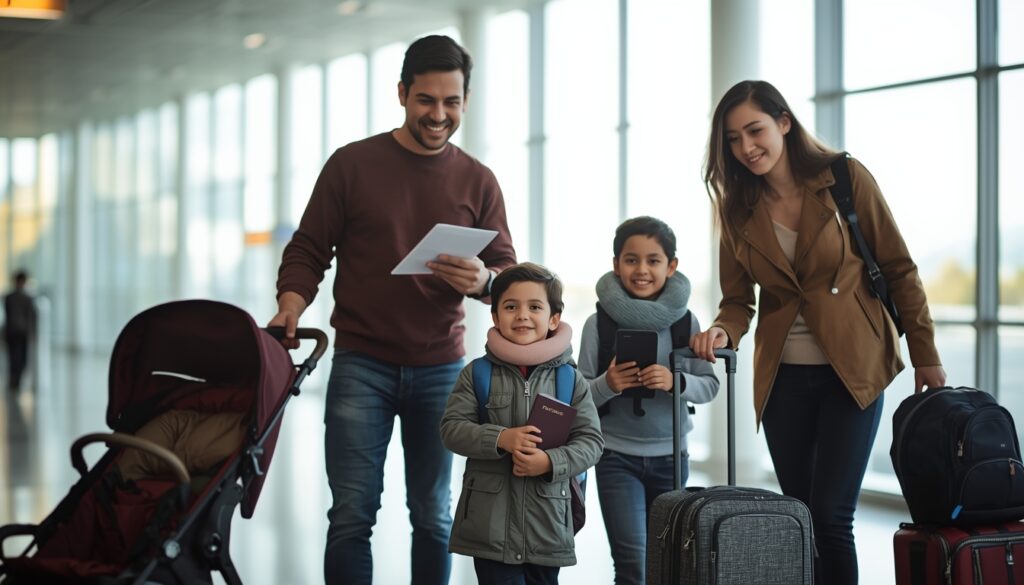
Imagine being in a busy airport in another country, weaving through crowds with your kids holding their backpacks. You catch the smell of fresh coffee and hear people speaking a language you don’t fully understand. Signs help guide you to your next stop. Traveling with kids doesn’t have to be stressful. With a little planning, your family trip can be fun and memorable for everyone.
Preparing Your Kids for Travelling Internationally
Start preparation 12 weeks before you leave. Show your kids destination pictures and teach them basic local phrases. Involving children in planning increases excitement and cooperation.
Make a simple timeline with important dates, like when passports are due and your departure day. This helps younger kids understand what’s happening and feel less anxious.
Start With Smart Planning Before You Go
Check everyone’s passports as soon as possible. Many countries want passports to be valid for at least six months after you arrive. Kids’ passports expire every five years, which is sooner than adult passports. Processing can take more than 12 weeks during busy times, so apply early.
Make both digital and paper copies of your travel documents. Email one set to yourself, put another in your checked bag, and keep the originals in a different place. Having backups can save you a lot of time if anything gets lost.
Check visa rules for every country you’ll visit, even if you’re stopping there briefly. Some places need visas for short layovers. Since applications can take weeks, look into this right after you book your flights.
See your child’s doctor 8 to 12 weeks before you leave to talk about vaccines. The CDC suggests keeping up with regular shots and getting any extra ones needed for your destination. Some vaccines need more than one dose, so plan.
If you travel abroad more than once a year, think about signing up for Global Entry. Kids can join too, and many families say it saves them 15 to 20 minutes at immigration compared to regular lines.
Choose the Right Flight Options
Try to book nonstop flights if you can. Every extra connection adds stress and can cause delays. If you need to connect, pick layovers of about three hours so kids have time to move around and eat. Many big airports now have play areas for families.
Choose flight times that fit your kids’ sleep schedule, especially for overnight trips. Leaving around 7 or 8 PM helps them stick to their usual routine once you’re in the air.
Ask for kids’ meals when you book your tickets. These usually come out before the regular meals, so hungry kids don’t have to wait. Use TSA PreCheck or Global Entry to avoid long security lines. Kids under 12 can go with parents who are enrolled; no extra membership is needed.
Pack Smart for a Smooth Trip
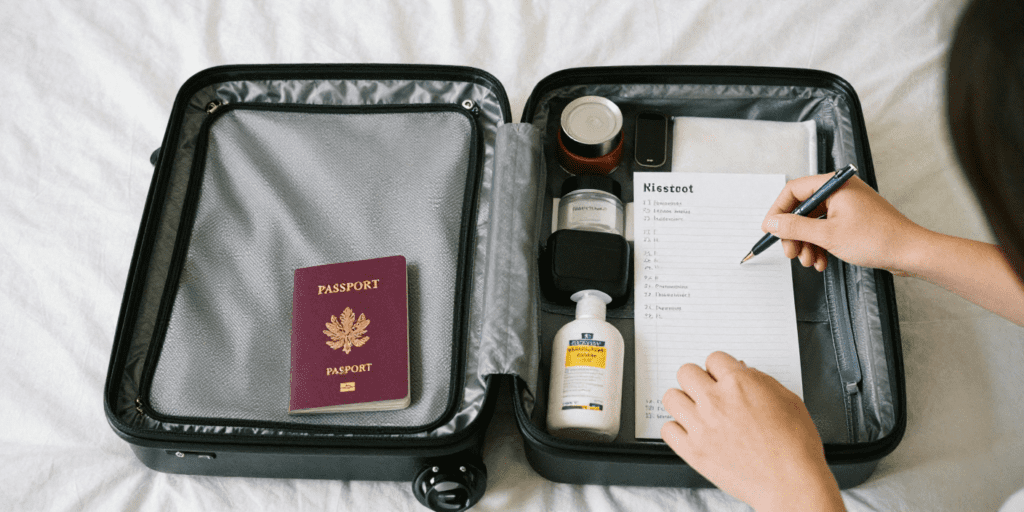
Pack everything you’ll need for the flight in your carry-on, plus a full change of clothes for each person, even adults. Packing cubes for each family member makes it easy to find things quickly.
Be sure to bring items such as children’s pain reliever, allergy medicine, band-aids, hand sanitizer, any necessary prescriptions (with copies), and large plastic bags for spills. Pack snacks your kids like, since airport food can be pricey and not very appealing.
Please have each child bring a comfort item, such as a favorite stuffed animal or small blanket. These familiar things help kids feel safe in new places.
Keep Kids Engaged During Travel
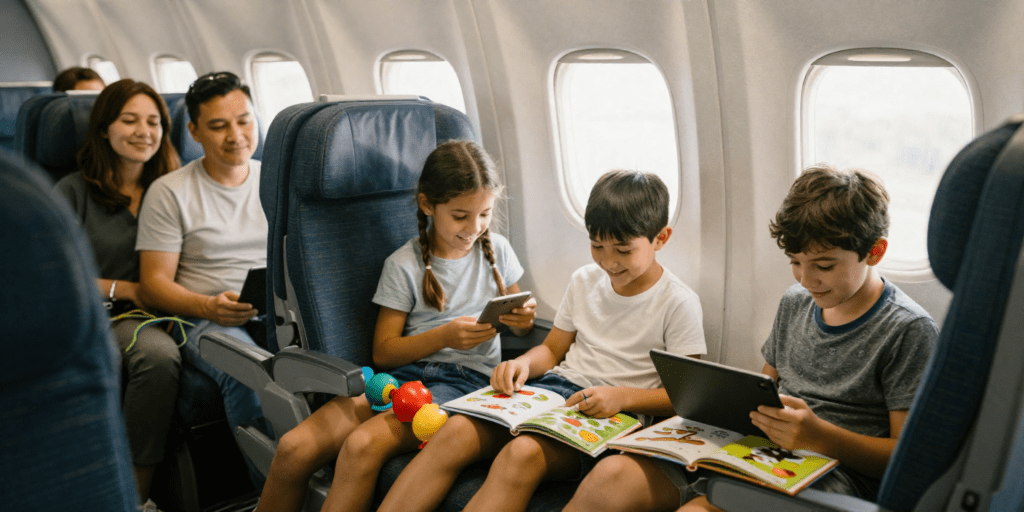
Download movies, shows, and games to your tablets before you leave, since airplane WiFi often doesn’t work well and can be expensive. Pack a small bag with new toys or activities for each child—new things usually keep their attention longer than old favorites.
Wrap a few small toys separately and give them to your kids one at a time. Unwrapping is fun by itself, and spreading them out keeps kids interested longer. Coloring books and sticker sets are great because they don’t have tiny pieces to lose.
It’s okay to allow more screen time than usual when you travel. If tablets or phones help keep your kids calm on a long flight, it’s a win for everyone. Bring headphones made for kids, since regular earbuds often don’t fit well.
Bring empty water bottles to fill up after you go through security. Staying hydrated helps everyone feel better during the trip.
Balance Activities & Downtime at Destination
Plan for just one big activity each day. Trying to do too much can make everyone tired and less able to enjoy the trip. Stay at least three nights in each place to avoid the stress of packing up all the time.
Make time for rest every day. Go back to your hotel or rental for a midday break so everyone can recharge. If you can, pick places to stay that have separate bedrooms and a kitchen—vacation rentals often work better for families than one hotel room.
Balance cultural outings with fun for kids. After a museum, head to a playground. Try to keep meal times close to your usual schedule to help kids feel settled. Let your children pick between two activities each day to encourage cooperation.
Safety & Health Tips for Peace of Mind
Look up nearby medical centers before you leave and save their addresses in your phone. Get travel insurance that covers medical emergencies abroad, since regular health insurance often doesn’t work well overseas.
Bring copies of important medical info, like allergies, medications, and your child’s doctor’s contact details. Teach your kids your phone number and where you’re staying. Little ones can keep this info on a card in their pocket.
In some countries, people use bottled water for drinking and brushing teeth. Avoid raw veggies and fruits you can’t peel. Put on sunscreen often, since the sun can be stronger in different places, and kids burn easily. If your kids are tired or not feeling well, stick to foods they know.
Capture Memories & Make It Fun

Give your kids easy-to-use cameras so they can take their own photos. They often capture moments adults might miss and make special memories. Start a simple travel journal where your kids draw a picture and write a sentence about their favorite part of each day.
Pick flat souvenirs like postcards, ticket stubs, or pressed flowers instead of bulky things. Take photos at famous spots, but also snap pictures of your kids just being themselves. Sometimes, let your kids stay up a bit later to enjoy special evening activities—they’ll remember these moments.
Conclusion
Planning an international family trip takes work, but the rewards are worth it. Kids learn to adapt, become more aware of other cultures, and gain confidence. Start early, focus on what matters most, and don’t worry about being perfect. With good planning and realistic expectations, your family will have an adventure to remember. Picture the moment: as the sun sets, tiny shoes gently swing off the edge of a ferry, the waves murmuring beneath, marking the end of another day filled with laughter and discovery. These are the memories that last a lifetime.