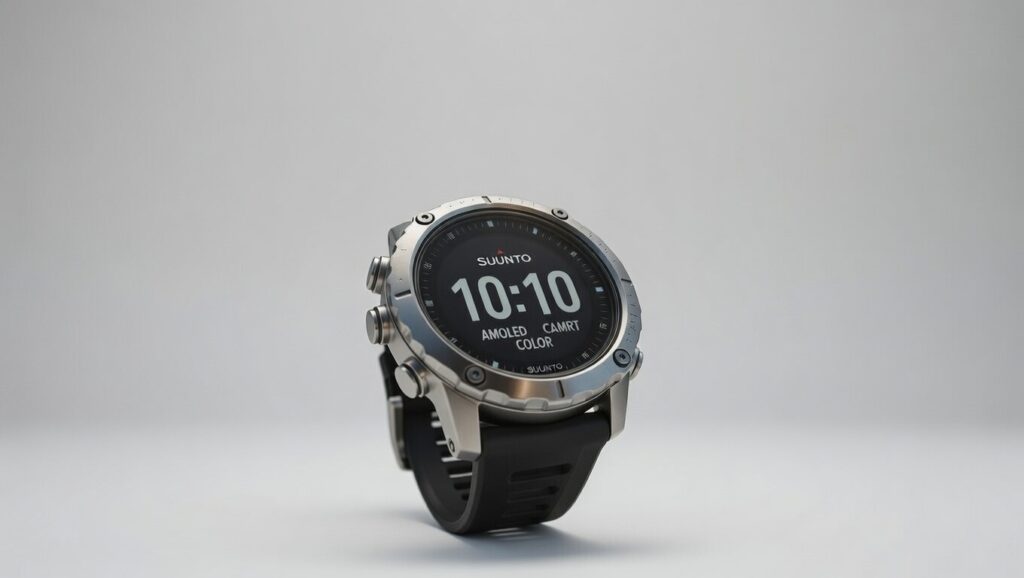
The Suunto Vertical 2 does something most GPS watches still struggle with: it pairs a vivid 1.5-inch AMOLED display with 65 hours of dual-band GPS battery life. That combination alone makes it one of the most compelling adventure watches of 2026 for runners who refuse to compromise between screen quality and endurance.
Released in late 2025 at $599 for the stainless steel version, it replaces the solar-powered Vertical 1 entirely. Suunto dropped solar charging, added a built-in LED flashlight, upgraded the processor, and moved to AMOLED. The result is a watch that genuinely feels like a leap forward, not just a refresh.
Key Specifications
Display: 1.5-inch AMOLED LTPO, 466×466 px, 2,000 nits peak brightness
Processor: Ambiq Apollo510 SoC (Arm Cortex-M55 with Helium vector tech)
GPS: Dual-band GNSS (L1+L5), multi-constellation
Battery (GPS): 65h Performance, 75h Endurance, 110h Ultra, 250h Tour
Battery (Watch): Up to 20 days in smartwatch mode
Weight: 87g (stainless steel)
Case Size: 49mm
Water Resistance: 100m
Materials: Stainless steel or titanium case, sapphire crystal glass
Strap: Standard 22mm, silicone included (two straps included at launch)
Sport Modes: 115+ built-in activity profiles
Maps: Full-color offline maps with contour lines, elevation gradient
Price: $599 (stainless steel) / $699 (titanium)
Sensors: Optical HR, barometric altimeter, compass, SpO2, HRV, temperature
Design and Build Quality
Rugged Construction
Pick up the Suunto Vertical 2, and the first thing you notice is weight. At 87 grams, the stainless steel model sits firmly on your wrist. That metal construction is not accidental; Suunto built this watch to take a beating. The sapphire crystal glass resists scratching on rocky trail approaches, and with 100m water resistance and an operating range from -20C to +55C, it handles conditions most runners will never push it to its limits.
The all-metal casing gives the watch a tool-watch aesthetic that separates it from plastic-framed alternatives. The build quality difference between this and watches using composite lugs is immediately noticeable. There are no creaks, no flex, just solid construction throughout.
Size, Weight, and Comfort
The 49mm case runs large. If you have smaller wrists, that is worth knowing before you buy. During testing across road runs, trail sessions, and long hiking days, the watch’s balance point kept it from feeling intrusive. The silicone band stays comfortable even after several hours, does not trap sweat, and the two-strap option at launch adds immediate versatility for training and everyday wear.
Titanium buyers drop meaningful weight compared to the steel version, which matters for runners covering 50 miles or more in a single outing. For most daily training, the steel version is perfectly manageable.
Buttons and Touchscreen Usability
Three physical buttons run down the side. They work reliably with gloves on, in the rain, mid-swim, and during grip-heavy scrambling. The touchscreen handles map navigation beautifully; pinch-to-zoom and panning through color maps on a 1.5-inch AMOLED screen is genuinely enjoyable compared to scrolling through monochrome MIP alternatives.
The hybrid control approach works well once you internalize the logic: buttons for workout control, touch for map interaction. It takes a day or two to feel natural, then it becomes second nature.
AMOLED Display Performance
Outdoor Visibility
At 2,000 nits peak brightness, the Vertical 2 screen holds up well in direct sunlight. It is not perfect in extreme conditions, particularly when wearing glasses or casting a shadow over the face, but in realistic outdoor running and hiking scenarios, legibility is excellent. This is significantly better than first-generation AMOLED sports watches.
UI Clarity and Watch Faces
The 466×466 pixel resolution means data fields are sharp, map contour lines are clear and readable, and watch faces that use color gradient properly convey elevation and heart rate zone information at a glance. Suunto offers multiple face options, from clean analog to adventure-themed digital layouts. All render crisply at this resolution.
Always-On Usability
Always-On Display mode costs roughly 10 to 20 percent of battery life. With AOD active, you can expect around 50 to 60 hours in dual-band GPS mode rather than the full 65. For runners checking pace and heart rate mid-stride, AOD solves the wrist-flick lag problem entirely. There is a brief delay when waking the screen from off mode, which is fine for daily wear but slightly frustrating mid-interval. Enabling AOD is the straightforward fix.
Multi-Band GPS Performance
Dual-band GNSS using both L1 and L5 frequencies stabilizes tracking in technically demanding environments, such as dense tree cover, narrow valleys, and canyon terrain. Real-world testing consistently shows clean track logs without the wandering lines common in single-band watches. Signal acquisition is quick, and the watch maintains a reliable lock throughout long efforts.
Full-color offline maps are where this watch earns its price premium. You can pan, zoom, view contour lines, see elevation gradient color-coding (red for steep, green for flat or descent), and follow grid references, including Ordnance Survey references for UK users. The map download process through the Suunto app feels slightly dated, and route storage is limited to roughly 10 to 12 slots despite 32GB onboard memory. No on-watch re-routing exists, so if you go off course, you navigate back manually. For runners and hikers who plan routes before heading out, though, it is one of the most self-sufficient navigation systems available at this price.
Running and Trail Accuracy
Pace and distance data from the dual-band system are trustworthy. The barometric altimeter provides more reliable elevation readings than GPS-derived altitude, which matters for anyone tracking climb and descent on technical routes. Heart rate from the optical sensor measures within roughly 3 to 4 BPM during steady efforts. During high-intensity interval work, wrist-based optical sensors on any watch show variability; a chest strap resolves this if workout precision matters to you.
Battery Life and Endurance Modes
Smartwatch Battery
Twenty days of smartwatch use put the Vertical 2 ahead of most AMOLED competitors. With moderate brightness and AOD off, real-world use comfortably exceeds 1.5 weeks. That means weekly charging for most users rather than every two to three days, which is a meaningful quality-of-life improvement over smartwatch-oriented alternatives.
GPS Battery
The four defined GPS modes cover most endurance use cases. Performance mode gives 65 hours with dual-band accuracy and color maps active. Endurance mode stretches to 75 hours using single-band tracking. Ultra mode pushes to 110 hours by removing wrist heart rate. Tour mode reaches 250 hours by reducing GPS frequency, designed for multi-day expeditions where checkpoints matter more than continuous tracking. Users can also build custom battery profiles, which is particularly useful for activating the touchscreen during activities since it is off by default in GPS mode.
Long-Distance Modes
For 100-mile ultramarathons or multi-day fastpacking, the Ultra and Tour modes provide meaningful flexibility. The Vertical 2 is one of the very few AMOLED watches you can use to plan a 48-hour adventure race without carrying a power bank. That is the standout technical achievement here; Suunto matched the battery performance of its solar-powered predecessor without solar charging, purely through LTPO display efficiency and processor improvements.
Sports and Health Features
With 115+ preloaded activity profiles and the ability to create custom multisport setups, the Vertical 2 covers the full range of endurance and outdoor-sport tracking. Running-specific tools include Training Stress Score, Chronic Training Load, interval support, and an AI Coach function that adjusts training suggestions based on accumulated fatigue. Strava, TrainingPeaks, Komoot, and the Suunto app all sync cleanly.
Heart rate runs 24/7 with HRV-based recovery scoring and sleep tracking. SpO2 monitoring is available for altitude awareness. The barometric altimeter provides weather trend data alongside elevation. The built-in LED flashlight offers white, red, and SOS modes, genuinely useful for pre-dawn starts, trail crossings, or aid-station navigation.
The Vertical 2 is not competing with Apple Watch or Garmin’s smartwatch-heavy ecosystem. There is no music storage, no tap-to-pay, and limited third-party app integration. If those features matter to you, look elsewhere. If structured training data, navigation, and endurance capability define your priorities, this watch covers the ground comprehensively. You might also find our
If you are weighing options across the broader GPS watch market, our COROS Pace 4 review and buying guide offers a compelling, lightweight alternative worth considering before you decide.
Comfort and Daily Use
The Vertical 2 wears acceptably as an everyday watch for a 49mm device. The silicone strap is soft enough that extended wear does not become uncomfortable, and it handles humidity and sweat without irritation. The metal bezel and sapphire glass give it enough visual weight to not look out of place in casual settings.
Notifications arrive reliably from paired phones. Smart features are present but deliberately minimal. This is a training and navigation instrument that happens to tell the time and pass along messages, not a lifestyle device. The distinction is a feature, not a flaw, depending on what you need.
Pros and Cons
Pros
- Best-in-class AMOLED battery life: 65 hours, dual-band GPS on a vivid color screen
- Full offline color maps with contour lines and elevation gradient coding
- Dual-band GNSS performs reliably in tree cover, valleys, and technical terrain
- Built-in LED flashlight with white, red, and SOS modes
- Rugged all-metal construction with sapphire glass and 100m water resistance
- Advanced training metrics, including TSS, CTL, and AI-driven coaching
- Standard 22mm strap compatibility for easy swapping
Cons
- No music storage, no tap-to-pay, limited third-party app ecosystem
- A 49mm case size is large for smaller wrists
- Route storage is limited to roughly 10 to 12 slots despite the 32GB onboard memory.
- No on-watch re-routing; manual navigation required if you go off course
- Optical HR accuracy drops during high-intensity efforts; chest strap recommended
- Wrist-flick screen wake has slight lag with AOD off
What Is in the Box
- Suunto Vertical 2 watch unit
- Two silicone straps (launch promotion)
- USB-C magnetic charging cradle (improved magnets vs previous generation)
- Quick start guide
Final Verdict
Yes, for the right runner. If you train for and race ultras, fastpack multi-day routes, or regularly navigate technical trails where reliable maps and long battery life determine whether an outing is enjoyable or miserable, the Suunto Vertical 2 justifies its price. At $599, it undercuts the Garmin Fenix 8 by $400 while matching or exceeding its battery life and offering a brighter AMOLED display.
The combination of 65-hour dual-band GPS, full offline color maps, genuinely rugged construction, and a display that makes all of that data actually readable is not available in many watches at any price. Suunto resolved the longstanding tension between AMOLED screens and endurance battery life, and that is the core reason this watch earns serious consideration.
It is not the right tool if you want smartwatch platform features, music, or payments. But for athletes who measure their outings in hours rather than minutes, the Vertical 2 delivers where it matters most.
FAQs
Is the Suunto Vertical 2 good for ultra running?
Yes. With 65 hours of dual-band GPS in Performance mode, 110 hours in Ultra mode, and offline color maps, the Vertical 2 handles 100-mile races and multi-day stage events without requiring a mid-race charge. The rugged construction and integrated flashlight add practical value for long-distance events that involve night running.
How accurate is the GPS?
Dual-band GNSS using L1 and L5 frequencies delivers strong accuracy in challenging conditions, including under tree cover, in valleys, and in narrow canyons. Track logs are consistently clean in real-world testing. The barometric altimeter improves elevation accuracy beyond what GPS altitude provides alone.
Does it have offline maps?
Yes. The Vertical 2 supports full-color offline topo maps downloaded region by region through the Suunto app. Maps display contour lines, color-coded elevation gradients, and waypoints. Route storage holds approximately 10 to 12 pre-loaded routes. There is no on-watch re-routing, so planning routes before your outing is important.
How long does the battery last?
In Performance mode with dual-band GPS, color maps, and tilt-to-wake screen active: 65 hours. With Always-On Display enabled, expect 50 to 60 hours. Endurance mode extends to 75 hours, Ultra mode to 110 hours without wrist HR, and Tour mode to 250 hours with reduced GPS frequency. Smartwatch mode delivers up to 20 days of battery life between charges.