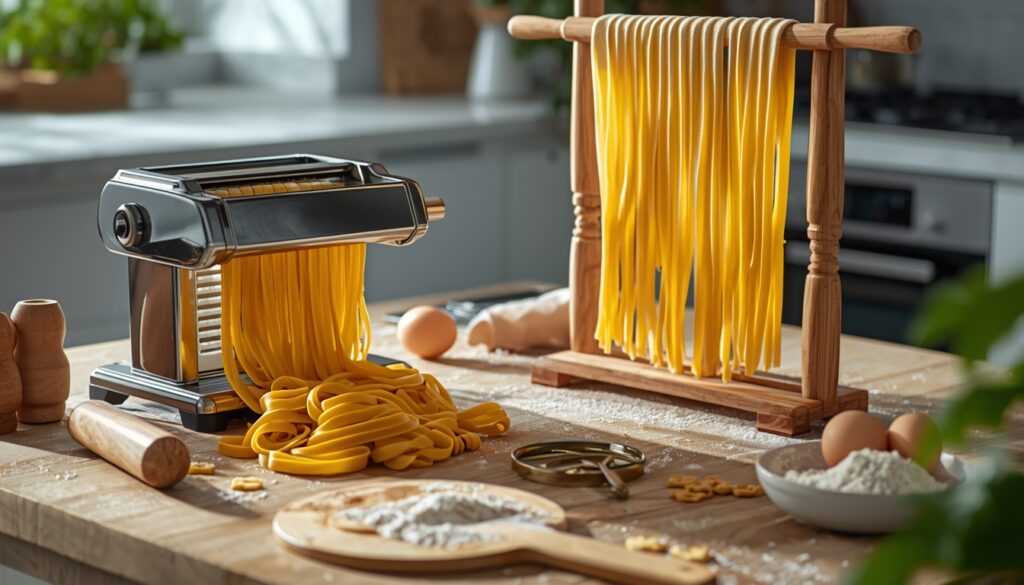
Making pasta at home delivers texture and flavour that dried supermarket noodles simply cannot match. Fresh pasta cooks in just 2 to 4 minutes and absorbs sauces more effectively because of its porous surface.
The process itself becomes therapeutic once you have the right equipment. Store-bought fresh pasta costs $6 to $9 per pound in 2025, while homemade costs roughly $1.50 per pound when you factor in flour, eggs, and minimal electricity.
Health-conscious cooks appreciate full control over ingredients. You can experiment with whole wheat flour, add spinach for color, or create gluten-free versions using alternative flours. The equipment investment pays for itself after making pasta just 15 to 20 times.
Essential Pasta Machine Guide
A pasta machine transforms lumpy dough into smooth, professional sheets ready for cutting into any shape.
Manual vs Electric Comparison
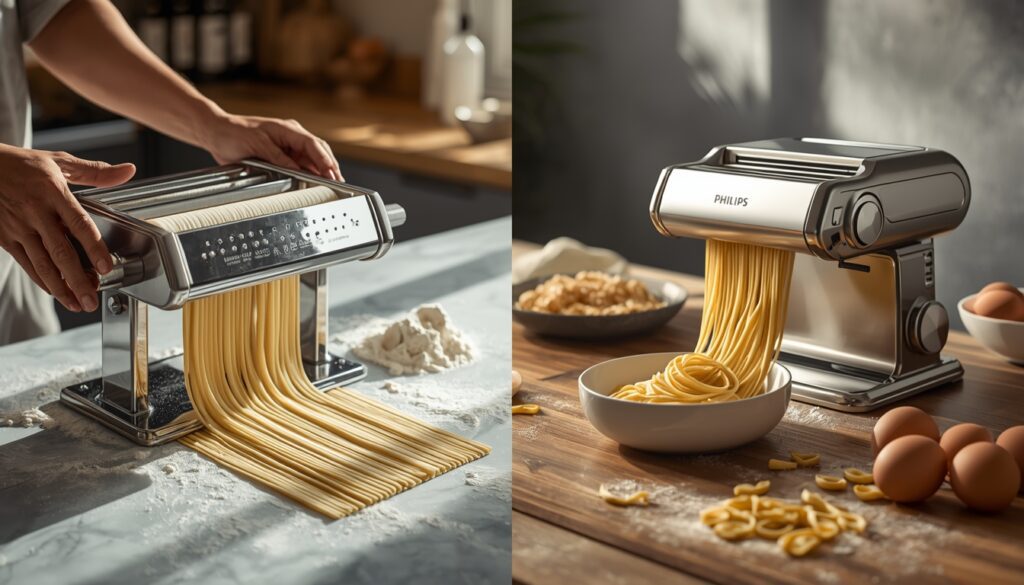
Manual machines give you complete tactile control. You crank the handle while feeding dough through adjustable rollers set from 0.8mm (thin like capellini) to 4mm (thick for pappardelle).
These machines clamp securely to counters with at least 2 inches of overhang. The Marcato Atlas 150 remains the standard benchmark in 2025, featuring a 150mm wide roller that processes dough faster than narrower 120mm models.
Electric pasta makers automate the entire process from mixing to extrusion. You pour flour and liquid into the chamber, select your pasta shape, and watch spaghetti or rigatoni emerge fully formed.
The Philips Smart Pasta Maker leads the electric category at $299, producing up to 1 pound of pasta in 18 minutes. These machines work best with manufacturer recipe ratios since moisture content significantly affects extrusion quality.
Key Tradeoff: Manual machines cost less ($79 to $120) and handle any dough recipe. Electric models ($150 to $350) save labor but require specific recipes for optimal results.
2025 Top Picks and Pricing
The Marcato Atlas 150 sells for $89 at most retailers in 2025. This Italian-manufactured machine includes a pasta roller and fettuccine cutter, with optional spaghetti and linguine attachments available separately for $25 each.
Budget option: The Shule pasta machine at $38 on Amazon works adequately for occasional use but uses lighter gauge steel that may bend under heavy pressure, according to Culinary Hill’s budget pasta maker testing.
Premium pick: The Imperia iPasta at $189 features chrome-plated rollers that glide more smoothly than aluminum alternatives. The double cutter attachment makes both 2mm and 6mm noodles without swapping parts.
Stand Mixer Attachments
KitchenAid 3-Piece System
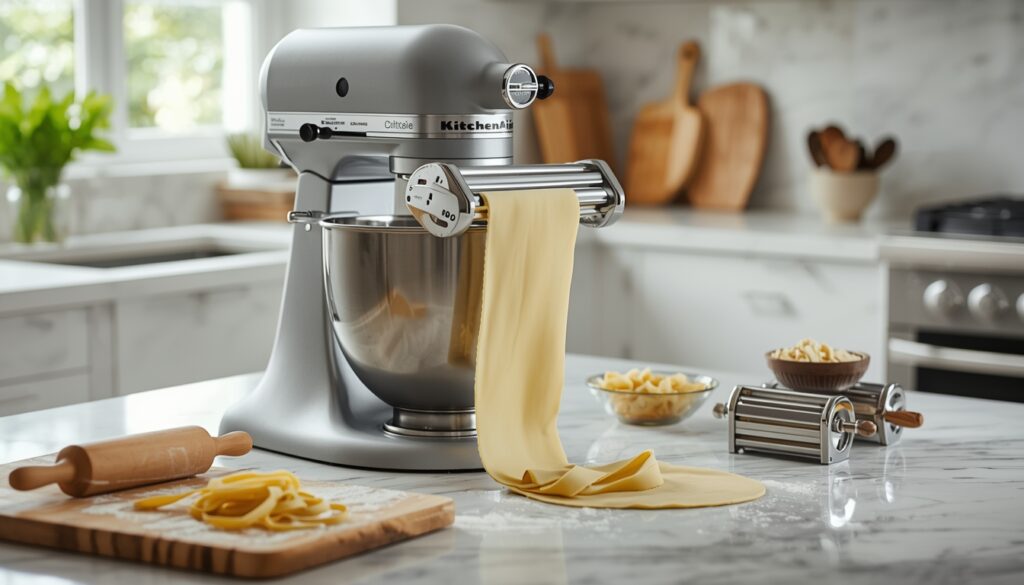
Anyone who already owns a KitchenAid stand mixer should seriously consider the pasta roller and cutter attachment set instead of buying a standalone machine.
This 3-piece system, priced at $149 in 2025, includes a roller with 8 thickness settings, as well as two cutters for spaghetti and fettuccine widths. The attachments connect to the power hub on the front of any KitchenAid model manufactured since 1937.
Installation takes under 60 seconds. You slide the attachment into the power hub, twist to lock, and adjust your mixer to speed setting 2 (never higher or you risk damaging gears), as specified in KitchenAid’s official usage guidelines.
The roller processes dough in stages. You start at setting 1 (thickest) and gradually work down to your target thickness, feeding the dough through 2 to 3 times at each setting until it becomes silky smooth.
Why Motorized Matters
Motorized operation frees both hands to guide and catch the pasta sheets. With manual crank machines, you either need a helper or develop the awkward skill of cranking with one hand while managing dough with the other.
The consistent motor speed produces more uniform thickness compared to hand cranking, where speed variations create subtle thick and thin spots.
Processing time drops dramatically. You can roll enough dough for 4 servings in about 8 minutes, versus 15 to 18 minutes with manual cranking.
The main limitation is that you must roll all the dough first, then switch attachments to cut. This requires briefly stacking pasta sheets separated by parchment paper. Still, the overall time savings and ease of use justify this minor workflow adjustment.
Traditional Pasta Roller and Board
Before electric machines and motorized attachments, Italian grandmothers rolled perfect pasta sheets using nothing but wooden tools and practiced technique. These traditional methods still work beautifully today and cost significantly less than machines.
Wooden Rolling Pins
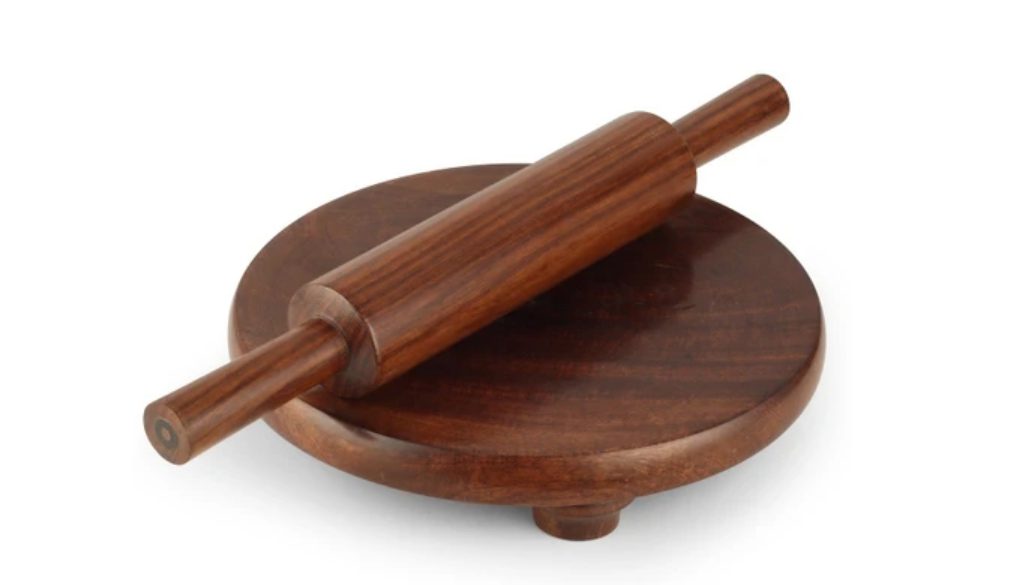
A proper pasta rolling pin differs from standard baking pins in several important ways. The ideal pasta pin measures at least 17 to 20 inches long with no handles at the tapered ends. This straight French-style design lets you feel the dough thickness directly through your palms.
The Thorpe Traditional Italian Rolling Pin sells for $24 in 2025 and features smooth hardwood construction at 20 inches in length. Avoid varnished or lacquered pins because you need that slightly rough wood texture to grip the dough without excessive flour.
Rolling pasta by hand requires building a rhythm. You start from the center and roll outward, rotating the dough 90 degrees after each pass. Experienced pasta makers can achieve remarkably even thickness approaching what machines produce, though it demands 15 to 20 minutes of practice per batch.
The physical connection to your dough teaches you how proper pasta should feel. You learn to adjust hydration based on how the dough responds to pressure. This tactile knowledge transfers even if you later switch to machines.
Pasta Boards
Traditional wooden pasta boards elevate the hand rolling experience from frustrating to enjoyable. These boards measure 24 to 32 inches square and feature a raised lip on one edge that hooks over your counter to prevent sliding.
The critical material is untreated birch or beech wood with a slightly rough surface. That texture creates enough friction for the dough to grip during rolling and kneading without sticking. Smooth or varnished boards fail because pasta slides around rather than cooperating.
Eppicotispai makes excellent pasta boards starting at $89 for a 24-inch model in 2025. The slightly porous wood absorbs minimal moisture from the dough, naturally preventing stickiness without requiring excessive flour dusting.
Beyond rolling, these boards provide an ideal kneading surface. The slight give in wood feels better on your hands than granite or marble during the 10-minute kneading process that fresh pasta requires.
For budget-conscious cooks, any untreated wooden cutting board at least 18 inches wide works adequately. Place a damp towel underneath to prevent sliding during rolling.
Ravioli Makers for Stuffed Pasta
Creating filled pasta by hand takes patience, but the right tools dramatically simplify the process.
Aluminum Press Style
The standard aluminum ravioli press costs $18 to $28 and creates a full tray of 12 uniform ravioli in one motion. Culinary Hill testing found ravioli makers essential for achieving consistent, professional-looking results without tedious hand pinching.
The press cuts and seals simultaneously, leaving you with perfectly portioned ravioli ready to cook or freeze. Each piece measures roughly 2 inches square with crimped decorative edges.
Wooden ravioli pins work differently. These rolling pins have raised square patterns that impress and cut the ravioli shape as you roll. They cost $12 to $20 and work well for small batches, but require more skill to achieve consistent results.
For serious ravioli production, the KitchenAid ravioli maker attachment ($129 in 2025) automates the entire process. You feed in sheets and fill separately, and complete ravioli emerge at a rate of about 24 pieces per minute.
Look for non-stick coatings or easy-release surfaces on any ravioli maker. Untreated aluminum sometimes holds onto sticky dough, making extraction difficult without tearing.
Biscuit Cutters
Round metal biscuit cutters provide a budget-friendly alternative to dedicated ravioli presses. A nesting set of 6 to 12 cutters costs just $12 to $18 in 2025 and serves double duty for both baking and pasta making.
For ravioli, you cut circles from your pasta sheets using a 3 to 4-inch cutter. Place a teaspoon of filling in the center of each circle, brush the edges with water, fold in half to create a half-moon shape, and press firmly to seal.
The Ateco stainless steel cutter set remains the professional standard. These cutters feature rolled edges that won’t bend under pressure and cut cleanly through fresh pasta without dragging or tearing.
Beyond ravioli, biscuit cutters excel at shaping tortellini, cappelletti, and agnolotti. The various sizes in a nesting set let you match the cutter diameter to filling quantity, preventing overstuffed or sparse portions.
Fluted edge cutters add decorative crimping while also creating a better seal than smooth edges. The ridges provide more surface area for the pasta layers to bond together.
Pasta Cutting Tools
Pastry Wheels
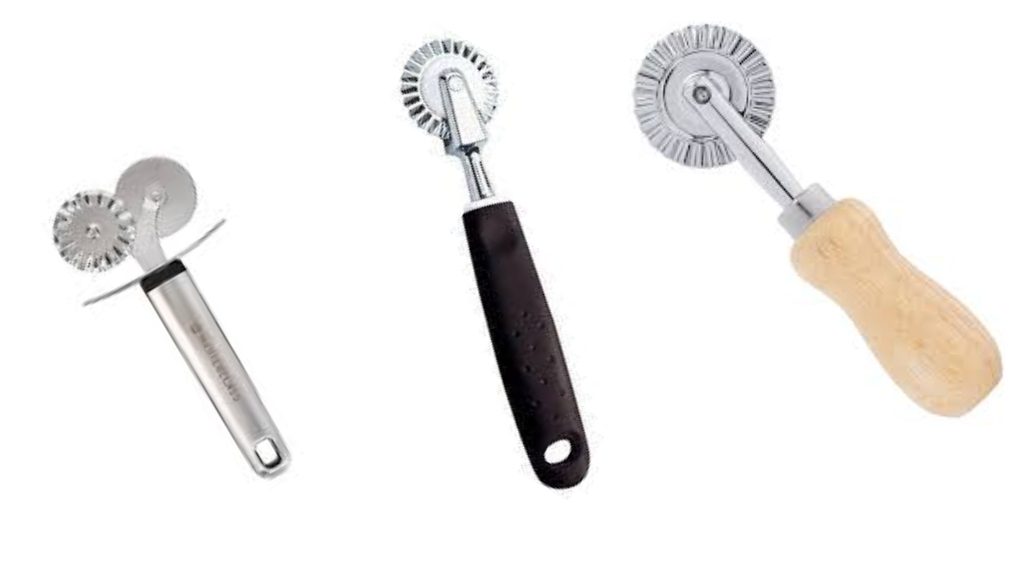
A quality pastry wheel (also called a pasta wheel) offers creative freedom beyond basic fettuccine and spaghetti shapes. The dual wheel design costs $16 to $32 and provides both straight and fluted cutting edges.
The straight blade makes clean cuts for lasagna sheets, pappardelle ribbons, or rectangular maltagliati. The fluted edge crimps as it cuts, creating decorative borders perfect for ravioli edges, farfalle butterflies, and garganelli.
Brass wheels hold their edge better than stainless steel alternatives. The slightly softer brass doesn’t dull as quickly when cutting through flour-dusted dough on wooden boards.
Traditional pasta wheels feature turned wooden handles that provide a comfortable grip during extended cutting sessions. The wheel diameter matters too. Larger 3-inch wheels roll more smoothly and evenly than compact 1.5-inch versions.
Some cutters include a dual-purpose design where the wheel also functions as a ravioli stamp. These combination tools press and seal the filling while cutting the outer shape, eliminating the need for a separate pressing motion.
The Eppicotispai brass pasta cutter at $28 represents Italian craftsmanship with a sharp cutting edge that lasts for years. For strict budget constraints, the Winco stainless pastry wheel at $8 performs adequately despite lacking the premium feel of brass.
Specialty Cutters
Beyond wheels, several specialty cutters expand your pasta repertoire. A chitarra (guitar cutter) features thin parallel wires stretched across a wooden frame. You press pasta sheets through the wires to create square cross-section spaghetti called spaghetti alla chitarra.
Traditional chitarra boxes cost $45 to $89 in 2025 and produce a distinctive texture that grips sauce better than round extruded pasta. The slightly rough surface catches every bit of your carefully prepared sauce.
Bike wheel pasta cutters create multiple ribbons simultaneously. These tools feature 5 to 7 parallel cutting wheels mounted on a single handle. One pass cuts an entire sheet into uniform fettuccine or tagliatelle in seconds.
For shaped pasta like farfalle, the specialized farfalle cutter combines cutting and pinching in one motion. You press down through the pasta sheet, and the tool simultaneously cuts a rectangle and crimps the center to create the characteristic bow tie shape.
Gnocchi Board and Texture Tools
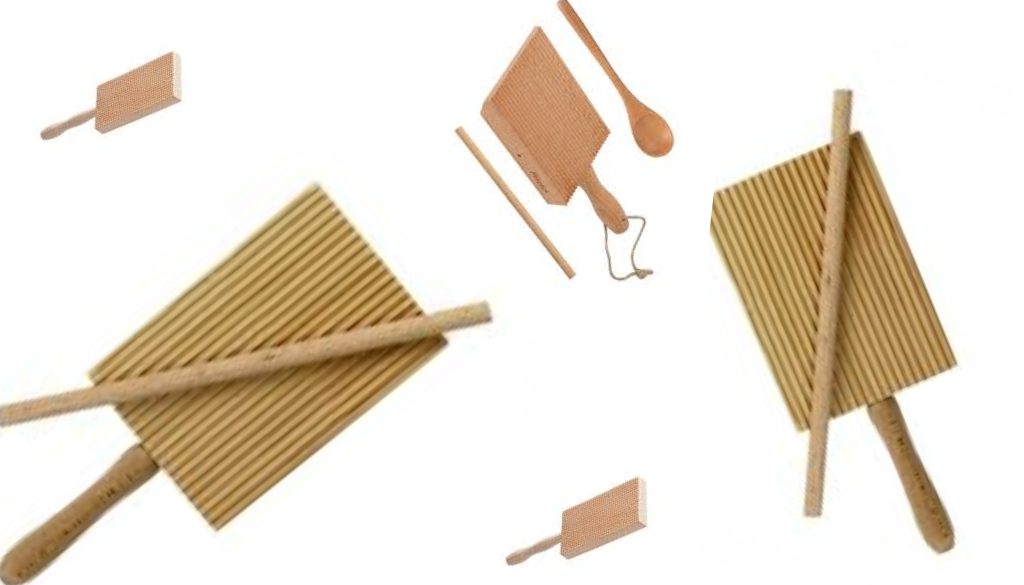
A gnocchi board (also called a rigagnocchi or cavarola) creates the distinctive ridges that help sauce cling to pasta. This simple tool costs just $8 to $15 and consists of a small wooden paddle with parallel grooves carved into the surface.
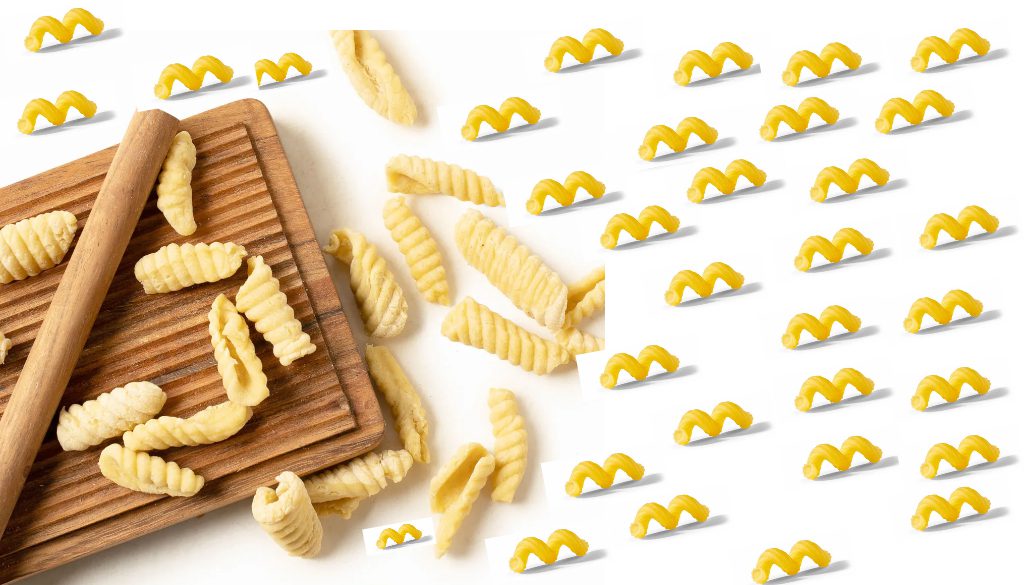
To use a gnocchi board, you roll small pieces of dough across the ridged surface using gentle pressure. The grooves imprint into the pasta, creating channels that trap sauce. This technique works for gnocchi, cavatelli, garganelli, and malloreddus.
The Eppicotispai beechwood gnocchi board at $12 in 2025 features the ideal ridge spacing and depth for traditional Italian shapes. The slightly rough wood surface provides just enough friction without sticking.
Traditional alternatives include using a fork. Press each gnocchi piece against the fork tines while rolling to create ridges. This method works but produces less consistent results than a proper board.
For larger production, a cavatelli maker mechanizes the ridging process. These hand-crank devices cost $35 to $55 and create perfectly ridged pasta shapes at a rate of about 100 pieces per minute.
The texture created by gnocchi boards significantly improves how the sauce adheres to pasta. Smooth-surfaced pasta allows sauce to slide off, while ridged pasta captures and holds every bit of flavor.
Pasta Drying Racks
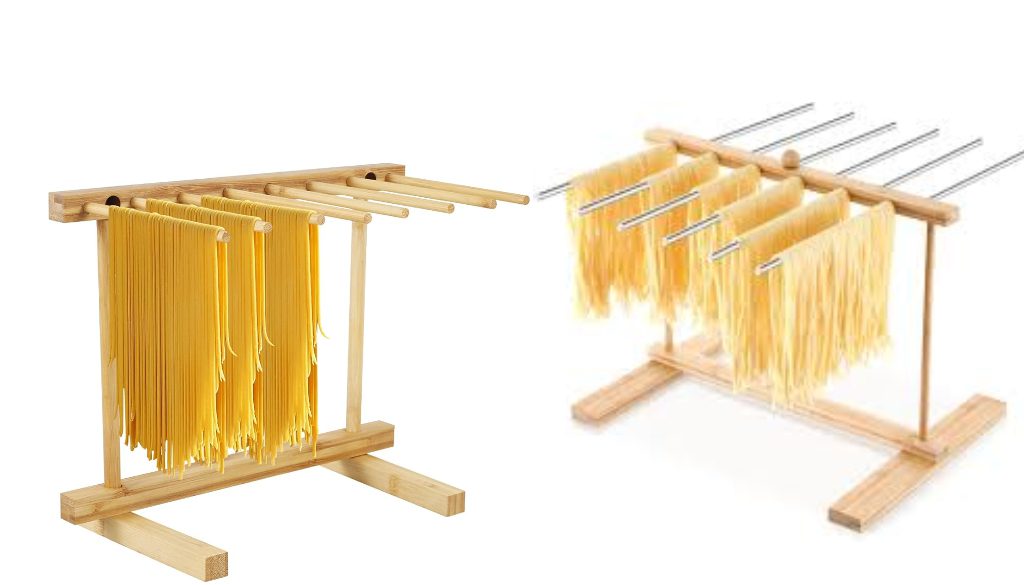
Proper drying prevents pasta strands from sticking together into a tangled mess before cooking.
Collapsible wooden racks remain the most practical option for home kitchens. These units cost $22 to $38 and feature 8 to 16 arms radiating from a central post. You drape long pasta strands over the arms and let them air dry for 15 to 30 minutes before cooking.
The wood naturally absorbs slight moisture while providing enough spacing to promote air circulation. Plastic racks cost less ($12 to $18) but tend to be less stable and may tip over when loaded with heavy wet pasta.
Drying time depends on your kitchen’s humidity. In dry winter months, pasta might be ready in 15 minutes. Humid summer conditions can require 45 minutes or longer.
For ravioli and shaped pasta, a simple wire cooling rack works perfectly. Place parchment paper on the rack to prevent sticking and arrange pieces in a single layer with slight spacing between each.
The Marcato Tacapasta wooden drying rack at $35 in 2025 provides excellent stability and holds up to 2 pounds of fresh pasta. Its 10-arm design offers enough capacity for a family dinner without overwhelming your counter space.
Collapsible designs solve the storage challenge. These racks fold to about 2 inches thick and tuck into narrow spaces beside refrigerators or in pantry corners. Permanent countertop racks look beautiful but demand significant real estate that most home cooks cannot spare.
Some pasta makers skip the drying rack entirely by forming pasta into nests immediately after cutting. You twist the strands into loose circular bundles that hold their shape during brief drying. This technique works but requires practice to prevent the nests from sticking together internally.
Essential Ingredients
While not gadgets themselves, having the right flour makes or breaks your pasta-making success regardless of your equipment quality.
Semolina Flour
Semolina flour comes from durum wheat and provides the golden color and firm texture associated with dried commercial pasta. This coarsely ground flour costs $4 to $7 per pound in 2025 and creates pasta that holds its shape beautifully during cooking.
The high protein content (12 to 14%) develops a strong gluten structure that prevents pasta from becoming mushy. Semolina-based dough feels slightly gritty compared to all-purpose flour but produces superior results for shapes like orecchiette, cavatelli, and any extruded pasta.
Bob’s Red Mill Semolina Flour leads the retail market with consistent quality at $6 per pound. For larger quantities, restaurant supply stores sell 25-pound bags of Caputo Semola for approximately $35, dropping the per-pound cost to $1.40.
Pure semolina dough requires only flour and water with no eggs. The typical ratio uses 100 grams of semolina to 50 grams of water (a 2 to 1 ratio by weight). This eggless dough works perfectly through manual pasta machines and creates the authentic texture southern Italian shapes demand.
Semolina absorbs water slowly, so mix your dough and let it rest for 30 minutes before rolling. This rest period allows complete hydration and prevents cracking during shaping.
00 Flour
Italian 00 (doppio zero) flour represents the finest grind available for pasta making. The name refers to the Italian classification system, where 00 indicates the most refined texture, similar to talcum powder.
This superfine flour costs $8 to $12 per pound for premium brands like Antimo Caputo in 2025. The extremely fine texture creates silky smooth pasta dough ideal for filled shapes like ravioli, tortellini, and lasagna sheets.
The protein content typically ranges from 9 to 11%, lower than bread flour but perfect for tender fresh pasta. Many Italian recipes specifically call for 00 flour because it produces the delicate texture northern Italian egg pasta requires.
For egg pasta, the classic ratio uses 100 grams of 00 flour to one large egg (about 50 grams). This produces pliable dough that rolls paper-thin without tearing. The fine texture also prevents grittiness in the final product.
King Arthur Baking sells its Italian Style 00 flour at $10 per pound with consistent results across batches. You can substitute all-purpose flour in a pinch, but the texture won’t match authentic 00-based pasta.
Many serious pasta makers keep both semolina and 00 flour on hand. Use semolina for sturdy shapes and eggless dough, switch to 00 for delicate filled pastas and ribbon noodles.
Budget Essentials Under $10
You can start making excellent pasta with just three inexpensive tools totaling under $25.
A flexible metal bench scraper might be the single most versatile pasta-making tool you can buy. This flat rectangular blade with a handle costs just $6 to $9 in 2025.
The scraper cleans work surfaces efficiently, removing stuck dough and flour in one smooth motion. It cuts dough into portions with straight edges. The flexible blade slides under pasta sheets to lift them without tearing.
Professional pasta makers use bench scrapers to form certain shapes like orecchiette and malloreddus by pressing and dragging the dough against the work surface. The tool even helps incorporate wet and dry ingredients when making dough by hand.
The Dexter Russell bench scraper at $8 features a stainless steel blade with a comfortable polypropylene handle. This workhorse tool lasts for decades with minimal care beyond basic washing.
A standard wooden rolling pin costs $8 to $15 and handles pasta rolling for anyone who prefers not to buy a machine. The technique requires practice to achieve even thickness, but plenty of excellent home pasta gets made this way.
Look for rolling pins at least 17 inches long without handles at the ends. The tapered French style works better than heavy American pins with handles because you can feel the dough thickness directly through your palms.
A dough scraper plus a wooden rolling pin gives you everything necessary to make perfect hand-rolled pasta for under $20 total investment. Add a simple pastry wheel for $8, and you have a complete kit for $28.
This minimalist approach works especially well for thicker rustic shapes that don’t require paper-thin dough. Shapes like orecchiette, cavatelli, and maltagliati actually benefit from the slightly uneven texture hand rolling produces.
Complete Shopping Guide
Beginner Starter Kit ($36)
- Bench scraper: $8
- Wooden rolling pin: $10
- Pastry wheel: $8
- Semolina flour (2 pounds): $10
This minimal setup lets you explore pasta making before committing to larger equipment purchases. You can make excellent orecchiette, cavatelli, and hand-cut noodles with just these tools.
Intermediate Kit ($145)
- Marcato Atlas 150 manual machine: $89
- Wooden drying rack: $35
- Aluminum ravioli press: $18
- Bench scraper: $8
- Pastry wheel: $8
- Semolina flour (2 pounds): $10
- 00 flour (2 pounds): $16
This comprehensive kit covers nearly every pasta type you might want to make. The manual machine provides consistency while keeping costs reasonable.
KitchenAid Owner Kit ($165)
- KitchenAid pasta attachment set: $149
- Wooden drying rack: $35
- Bench scraper: $8
- Pastry wheel: $8
- Semolina flour (2 pounds): $10
- 00 flour (2 pounds): $16
If you already own a KitchenAid mixer, this route makes more sense than buying a separate machine. The motorized operation justifies the slightly higher initial cost.
Advanced Artisan Kit ($245)
- Marcato Atlas 150: $89
- Eppicotispai pasta board: $89
- Thorpe rolling pin: $24
- Brass pastry wheel: $28
- Gnocchi board: $12
- Aluminum ravioli press: $18
- Biscuit cutter set: $15
- Wooden drying rack: $35
- Bench scraper: $8
- Semolina flour (5 pounds): $20
- 00 flour (5 pounds): $35
This premium setup provides both traditional hand methods and modern machine convenience. You can choose your approach based on the specific pasta you’re making.
Buying Strategy
Start with equipment that matches your actual pasta consumption patterns. Making pasta twice a month doesn’t justify a $300 electric machine. Weekly pasta nights make the investment worthwhile.
Buy quality tools once rather than replacing cheap versions repeatedly. A $28 brass pasta wheel outlasts three $8 stainless models while providing better cutting performance throughout its lifetime.
Wait to buy specialty tools until you know which pasta types you make most frequently. There’s no point owning a chitarra if your household prefers fettuccine and ravioli.
Consider storage space before purchasing. Dedicated pasta boards occupy significant real estate. Collapsible drying racks solve one storage problem. Manual machines clamp and remove easily versus permanent countertop electric models.
The best pasta comes from practice and good technique, not from owning every available tool. Master the basics first with minimal equipment, then expand your collection based on actual use patterns rather than hypothetical future needs.
Equipment quality matters more than equipment quantity. One excellent pasta machine used regularly beats a drawer full of mediocre gadgets gathering dust.